For more than a century, archaeologists believed they knew the story of the first Americans.
According to the traditional timeline, humans entered the Americas around 13,000 years ago, crossing a land bridge from Siberia and spreading south through an ice-free corridor. It was a theory taught in textbooks, accepted by scholars, and rarely questioned.
Then, deep within the blinding white sands of New Mexico, something impossible emerged from the ancient earth.
Human footprints.
Not one or two.
Hundreds.
Frozen in time beneath layers of sediment inside what is now White Sands National Park.
When scientists first analyzed the tracks, the results stunned the archaeological world. The footprints appeared to be between 21,000 and 23,000 years old—dating to the height of the Last Glacial Maximum, one of the coldest periods of the Ice Age.
If true, humans were walking across North America nearly 10,000 years earlier than many experts believed possible.

The discovery immediately ignited controversy.
Critics argued that the original radiocarbon dates, taken from ancient aquatic plant seeds trapped within the footprint layers, might be inaccurate. Perhaps the plants had absorbed older carbon from lake water, making the tracks appear far older than they really were.
But the researchers did not stop there.
Determined to test the claim, they launched one of the most rigorous archaeological investigations in recent history.
Using tens of thousands of fossil pollen grains from terrestrial plants and a completely independent dating method known as optically stimulated luminescence, scientists reexamined the site from multiple angles.
The result?
The new dates matched the original findings almost perfectly.
Three separate scientific methods pointed to the same conclusion:
Humans were present in North America more than 21,000 years ago.
Yet the mystery grows even deeper.
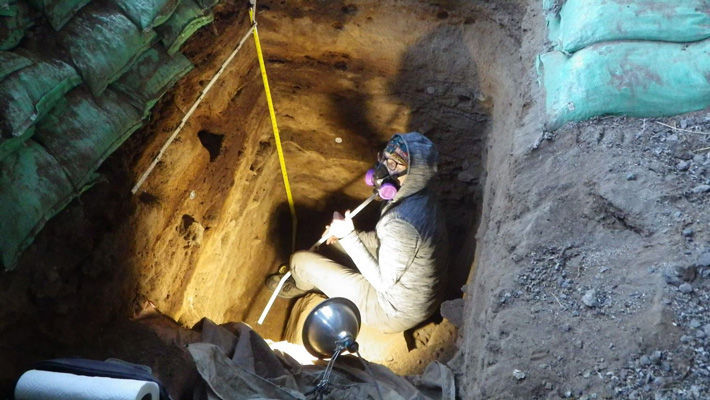
More than 1,300 miles away, inside the remote Paisley Caves, archaeologists uncovered another extraordinary clue. Ancient fossilized human feces—known as coprolites—contained preserved human DNA dating back over 14,200 years.

For years, skeptics claimed the DNA might have been contamination from later occupants of the caves.
So researchers tested something contamination could not easily alter: ancient fecal lipids and sterols, chemical fingerprints locked within the waste itself.

The verdict was remarkable.
The evidence confirmed that humans had indeed occupied the caves thousands of years before the rise of the famous Clovis culture.

Together, White Sands and Paisley Caves are rewriting one of humanity’s greatest migration stories.
Were there multiple waves of migration into the Americas?
Did some groups travel along the Pacific coastline while others moved through the continent’s interior?
How many ancient peoples arrived before the civilizations we know today?
The footprints remain silent.

The caves offer only fragments of answers.
But with every discovery, the old story grows harder to defend.
Perhaps the first Americans arrived far earlier than anyone imagined.
And perhaps their true journey is only now beginning to emerge from the shadows of the Ice Age.