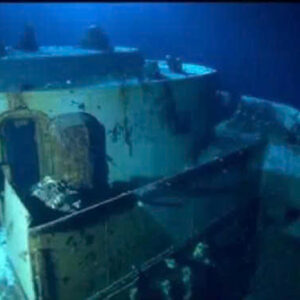
For more than 250 years, it rested in darkness nearly 2,000 feet beneath the cold waters off the coast of Norway.
No survivors.
No records explaining its final moments.
No one even knew it was there.

Then archaeologists sent a remotely operated vehicle into the depths and discovered something almost impossible.
Rows of Chinese porcelain plates were still stacked exactly where they had been placed centuries ago.
Not shattered.
Not scattered.
Not buried beneath debris.
Simply waiting.
The vessel, now known as the “Porcelain Wreck,” dates to the 18th century and lies deep within the Skagerrak Strait between Norway and Denmark.
Most shipwrecks tell stories of violence.
Storms tear ships apart.
Cargo shifts.
Wood splinters.
Everything sinks into chaos.
But this ship appears to have met a very different fate.

Researchers were stunned to find delicate porcelain dishes still neatly arranged in stacks. Some cargo crates remain sealed. Glassware, chandeliers, textiles, and luxury goods are still visible inside the wreck.
It is as if time stopped on the day the ship disappeared.
The porcelain itself may have originated in China during the height of global maritime trade, when European merchants transported enormous quantities of luxury goods across oceans.
These objects traveled thousands of miles.
They survived storms.
They crossed continents.
Yet after the ship vanished beneath the sea, they remained untouched for centuries.
The deep, cold, oxygen-poor environment acted like a natural time capsule, preserving the wreck in extraordinary condition.
Every plate.
Every crate.
Every artifact.

Frozen in history.
Now archaeologists are carefully documenting the site and recovering selected objects for study.
Each artifact may reveal new clues about the ship’s origin, crew, destination, and the vast trade networks that connected Europe and Asia during the Age of Sail.
Some mysteries remain unanswered.
Why did the ship sink?
What happened to the crew?
And how could such fragile cargo survive a shipwreck almost perfectly intact?
More than two centuries later, the ocean is finally beginning to reveal its secrets.

🌊 Imagine being the first person to see those porcelain plates after 250 years of darkness.
What do you think caused the ship to sink so gently?