THE 4,000-YEAR-OLD ROCK THAT LOOKS LIKE IT WAS CUT BY A LASER

Deep in the Saudi Arabian desert stands one of the world’s most mysterious geological formations.

Known as Al-Naslaa, this massive sandstone rock appears to have been sliced perfectly in half by an impossibly straight line.

At first glance, it looks artificial.

How Did The Al Naslaa Rock Formation Get Split In Two? | IFLScience

The split is so precise that many people struggle to believe it could have formed naturally. Even more remarkable, both halves stand balanced on their own natural stone pedestals, creating the illusion that an enormous blade—or perhaps something far more advanced—once passed through the rock.

Adding to the mystery, ancient petroglyphs carved into its surface reveal that people have known about this site for thousands of years.

10 Strange Rock Formations You Won’t Believe Are Natural - Geology Science

So what happened here?

Geologists believe the formation may have originated from a natural fracture in the sandstone. Over countless centuries, wind erosion, temperature changes, and geological processes gradually widened the crack, eventually creating the astonishingly straight divide visible today.

Yet not everyone is convinced.

Bí ẩn tảng đá hàng nghìn năm tuổi có vết cắt chẻ đôi chuẩn xác đến khó tin | Báo Dân trí

The unusual precision of the split has fueled countless theories. Some suggest it could be evidence that ancient civilizations possessed knowledge or technologies lost to history. Others believe it is simply one of nature’s most extraordinary coincidences.

To date, no evidence supports the idea of advanced ancient technology.

But the mystery remains.

After thousands of years standing alone in the desert, Al-Naslaa continues to challenge our assumptions and spark debate among visitors, researchers, and history enthusiasts around the world.

Is it a masterpiece of natural geology?

تقرير / صخرة "النصلة" جنوب تيماء .. أعجوبة صخرية ضخمة مقسومة إلى النصفين

Or could it be a clue to a forgotten chapter of human history?

Related Posts

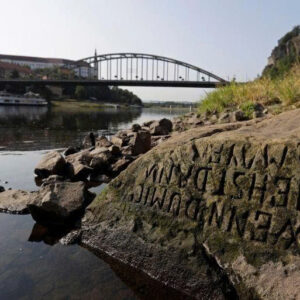
The Rivers Are Drying Up — And History Is Rising to the Surface

Quick Facts 1540: An 11-month megadrought struck Europe; the Rhine, Elbe, and Seine reportedly ran so low they could be crossed on foot. 2026: A “hunger stone”…

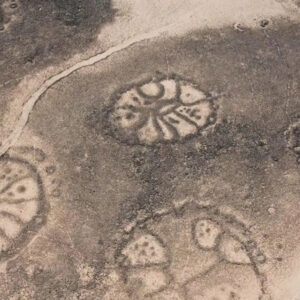
Strange Stone Circles Hint at a Lost Nomadic Culture of the Sahara Desert

Long overshadowed by Egypt’s pyramids and gold mines, the rugged Atbai Desert is finally revealing clues about the nomadic civilization that navigated its sand. Archaeologists have spotted…

Found. Then Hidden Forever: The Man Who Located Bismarck — and Told No One Except Germany

Robert Ballard found the Titanic. Then he found one of the most sought-after wrecks of World War II — and made a decision most people never expected….

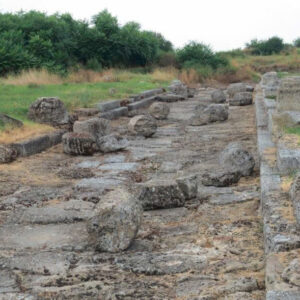
The Roman Bridge a 2026 Drought Pulled Back Into View

A mile-long bridge built under Emperor Constantine spent centuries hidden beneath the Danube — until a record-breaking heat wave finally let archaeologists see it whole. Quick Facts…

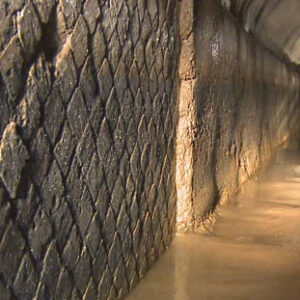
Rome’s Lost Aqueduct

By Rabun Taylor Searching for the source of one of the city’s greatest engineering achievements Archaeologist Katherine Rinne stands beside a large ancient Roman springhouse that may…

Archaeologists uncover mysterious face hidden for centuries in Book of Revelation city

The 7.2-foot figure depicting a young man dates to Lydian Kingdom era A rare, 2,500-year-old marble statue has emerged from the ruins of Sardis, an ancient city…