Every old school has its ghost stories. At the Cavour high school in Rome, the same whisper passed from class to class for years: there are hidden rooms under the gym. Most students grew up and forgot about it. A few didn’t.
And what those few eventually found beneath the floor turned out to be real — and far older than anyone dared imagine. Under the gymnasium where teenagers ran laps and sat their exams lay the frescoed remains of an 1,800-year-old Roman mansion: a luxury home from the height of the empire, hidden in plain sight just a short walk from the Colosseum.
The rumor that turned out to be true
For years, students at Liceo Scientifico Cavour traded the same legend — that something lay sealed beneath the gym floor. It might have stayed a story forever, if not for an unlikely moment.
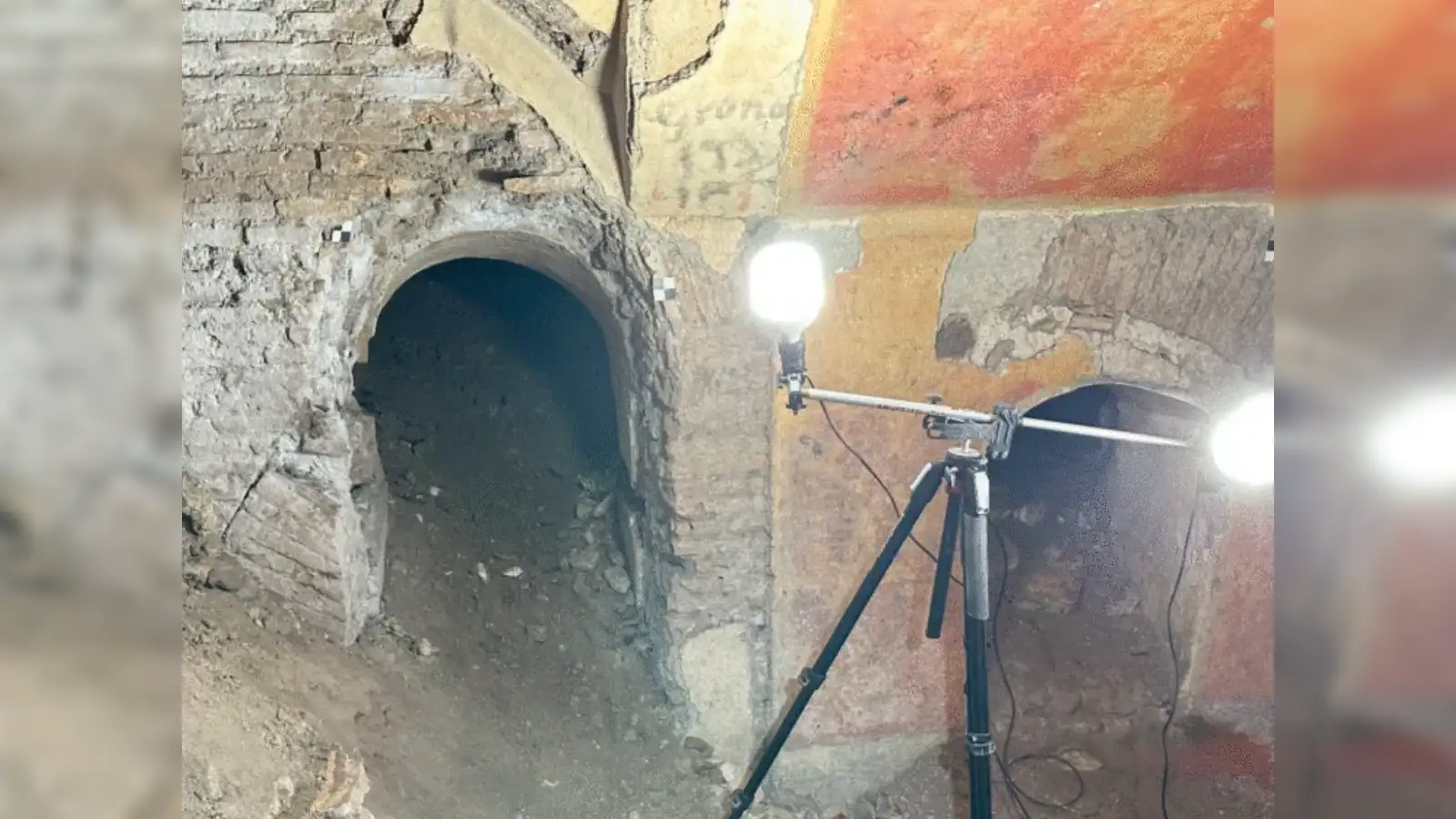
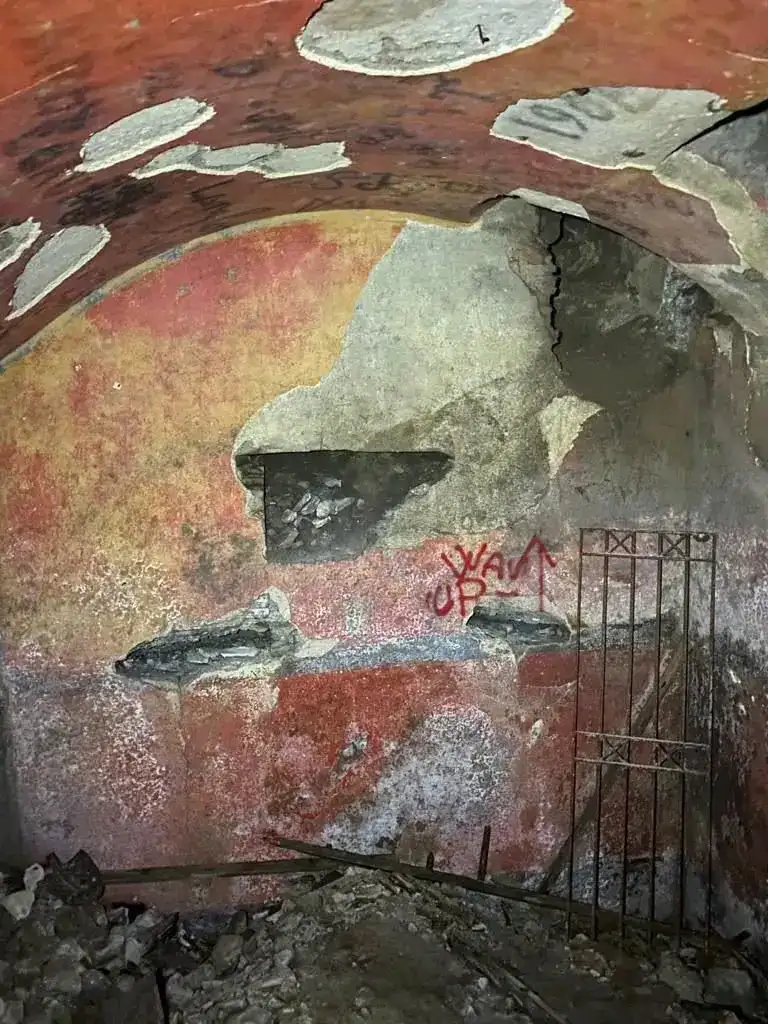
During a student occupation of the school in 2021, with the building briefly in the teenagers’ hands, some of them reportedly found a key to a locked iron door in the basement. Behind it, past a disused boiler room, was a narrow gap. They squeezed through — and stepped into a run of dim, ancient corridors whose walls still held their color: frescoes and mosaics that had not seen daylight in centuries.
This wasn’t a prank or a dare gone strange. It was a genuine discovery. A history and Latin teacher, Claudia Marino, took the students’ find seriously and alerted Rome’s heritage authorities. When the experts finally came down to look, the story stopped being a rumor — and started being archaeology.
A mansion at the heart of imperial Rome

In early 2026, archaeologists began a formal excavation beneath the gym. What emerged, piece by piece, was part of a lavish Roman domus — a private residence built, researchers believe, in the mid-second century AD, during the empire’s golden age.
And the address could hardly have been grander. The site sits less than a thousand feet from the Colosseum, in the ancient district between the Carinae and the Esquiline — one of the most desirable neighborhoods in all of Rome. This was where the city’s powerful chose to live; ancient sources place figures like Cicero, Pompey, and the young Octavian — the future emperor Augustus — in this very corner of the city. To own a home here was to live at the beating center of the known world.
What 1,800 years had kept
The house has not given up everything — but what it has shown is breathtaking. Archaeologists report walls painted with figurative scenes and delicate floral frescoes, and elaborate stucco decoration that survives all the way up to the vaulted ceilings. The floors include a mosaic laid from large, irregular tiles — a style typical of the second century.
Already, the team has reportedly lifted dozens of crates of material — some 48 of them — from the site. Each fresco fragment, each chip of mosaic, is a tiny window into the taste and wealth of whoever once lived inside these rooms.
Beneath a school gym, the good life of the Roman elite had been waiting in the dark — frescoes, mosaics and all — for the better part of two thousand years.

Whose house was it?
Here the story shades from spectacular into genuinely mysterious. Who lived here?
Archaeologists have floated a tantalizing possibility: the domus may have belonged to a member of the Umbrius family, a name possibly linked to the region of Samnium in south-central Italy. But it’s worth being clear that this is a careful hypothesis, not a settled fact.
The clue is older than the modern dig. Back in 1895, during construction for the opening of the nearby Via degli Annibaldi, workers uncovered parts of an ancient building — and, crucially, a lead water pipe stamped with the name of an Umbrius. In Roman homes, these stamped pipes (fistulae) often recorded the owner of the property. So the name on the plumbing is the thread that ties this grand house to a possible family: suggestive, but not proof. For now, the owner remains a shadow with a surname.
Found, lost, and found again
That 1895 glimpse carries its own quiet lesson. Part of this very residence had already been touched once, well over a century ago — and then the city simply built over it and moved on. The mansion slipped back out of memory, becoming, of all things, the foundations beneath a school.
It’s a reminder of how Rome works: a place so thick with history that an emperor’s neighbor’s house can be paved over, forgotten, and then rediscovered — this time by teenagers chasing a rumor.
Still sleeping under the school
For all the excitement, only a small portion of the domus has been uncovered. Much of it still extends beneath the school building, unexcavated and unseen, its full size and layout unknown. What other rooms, what other floors and paintings, might lie under the classrooms and corridors above? No one yet knows.
And there’s a fitting final chapter already being discussed. Plans are reportedly being weighed to one day open the site to the public — with the students themselves potentially serving as guides to the ancient home they helped bring back to light. The teenagers who once slipped through a gap in the basement could end up showing the world around it.
Why it stays with you
Maybe that’s what makes this discovery so irresistible. It isn’t a remote ruin in a desert or a tomb behind a velvet rope. It’s a Roman mansion under a working school — found because a few teenagers refused to let a rumor go. Proof that the past isn’t always far away and hard to reach. Sometimes it’s directly beneath our feet, under the gym floor, waiting for someone curious enough to open the locked door.
So here’s the question worth sitting with: how many more lost worlds are buried under the ordinary buildings we use every day — and what would we find if we only thought to look down?