In one of the driest deserts on Earth, a figure sits with its knees drawn up to its chest, just as it was placed nearly two thousand years ago. The skin has gone to leather. The mouth has fallen open. And spilling from the skull, impossibly, is a long rope of reddish hair — still tied, in places, with the faded ribbons of someone who once loved this person.
This is a Nazca mummy. It belongs to the Chauchilla Cemetery, a scatter of ancient graves in the coastal desert of southern Peru, near the town of Nazca. The desert kept it almost perfectly. Then, in the span of a single century, human hands very nearly destroyed what the sand had guarded for millennia — and that, more than anything, is the real story here.

A city of the dead in the world’s driest desert
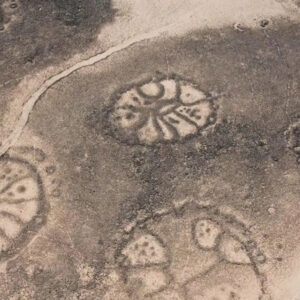
The Nazca mummies come from the people who built the Nazca culture, which flourished along Peru’s southern coast from roughly 100 BC to 800 AD. They are the same civilization famous for the Nazca Lines — those vast geoglyphs scratched into the desert floor. But their dead, researchers say, are every bit as revealing as their drawings.
Chauchilla Cemetery sits about 30 kilometres (19 miles) south of the city of Nazca, by a dry riverbed in the Ica Region. According to archaeologists, the graves there were used for some 600 to 700 years, with burials beginning around 200 AD and continuing into the 9th century. It is, by any measure, one of the most haunting open-air burial grounds in the Americas — and one of the most informative windows we have into Nazca life.
How the desert “made” a mummy
Strip away the eeriness and the first question is simply practical: how does a body survive two thousand years?
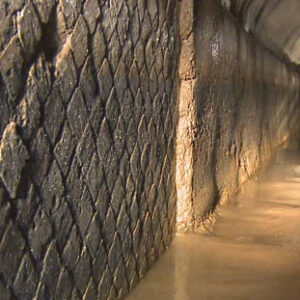
Part of the answer is the desert itself. The extreme aridity and salty soil of the Peruvian coast can desiccate a corpse naturally, drawing out the moisture that bacteria need before decay can take hold. But the Nazca, experts believe, did not leave it all to nature. The bodies appear to have been clothed in embroidered cotton, painted with a resin thought to seal out insects and slow bacteria, and then sealed into purpose-built tombs of mud brick that kept out damp.
There may be one more clue at the nearby site of Estaquería, where archaeologists once puzzled over rows of wooden posts. Some had assumed they were for astronomical sightings. It’s now widely thought, instead, that the posts were used to dry the dead — a deliberate step in turning a body into a mummy. Between a merciless climate and a careful, almost loving ritual, the Nazca dead were built to last.

Dressed for eternity
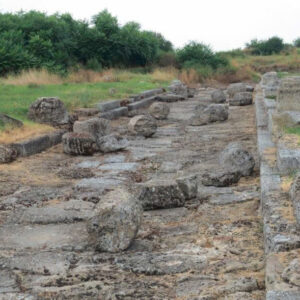
To the Nazca, it seems, death was not an ending so much as a passage — and they prepared for it with extraordinary care. The dead were wrapped in layers of cotton textiles, often richly woven, and set in a seated position, knees folded, as if waiting. Many were placed in shaft tombs cut deep into the desert and lined with mud brick.
The textiles themselves carried meaning. Many were embroidered with birds, serpents and part-human, part-animal figures — the same dreamlike imagery the Nazca painted onto their pottery — and researchers read them as protection for the soul on its journey. Some shaft graves were sunk several metres into the desert, reached by a vertical pit, which is partly why they became such rich targets for thieves.
They did not travel alone. Graves held offerings — painted pottery, food, the tools and tokens of a life. Some, more darkly, were accompanied by “trophy heads,” human skulls that the Nazca prepared and kept, a practice still debated by scholars and woven, literally, into Nazca art. Reverence and dread, it appears, lived side by side in their idea of the afterlife.
The red hair that refused to fade
Of everything the desert preserved, nothing unsettles visitors quite like the hair.
Across Chauchilla, mummies still wear long braids and ropes of hair, in some cases draped well past where the body ends. Reports describe strands more than a metre long, occasionally adorned — one famous “seated woman” is said to have hair still braided and set with small ornaments. Hair, it turns out, is one of the last things to surrender to time; in this desert it can hold its length, its braid, and much of its colour for two millennia.
So what about that reddish tone? Here it’s worth being careful. Some Andean mummies did have naturally brown or reddish hair, but researchers caution that centuries of sun, salt and chemistry can also shift the colour of dark hair toward red over time. Either way, the effect is the same: a face that has lost almost everything still keeps this one human, recognisable detail. The careful tie of a braid suggests this was someone of particular standing, or from a specific family line — a person, not a specimen.
The red hair survived two thousand years. The looters needed only an afternoon to scatter the rest.
What the looters took
Because here is the wound at the centre of Chauchilla. For much of the last century, the cemetery was torn apart by huaqueros — grave robbers — hunting for pottery and textiles to sell. They ripped open ancient pits, pulled the dead from their tombs, and left bones, wrappings and shattered ceramics bleaching across the desert floor.
What they stole was not only objects. They stole context. A mummy lying where it was buried — with its offerings, its position, its neighbours — tells archaeologists a story: who this person was, what they believed, how they lived and died. A mummy dragged out and dumped in the sand tells only half of that story, and sometimes less. The desert preserved the evidence with impossible patience; the looting erased much of its meaning in a few greedy hours.
Peru moved to protect the site by law in 1997, and many of the scattered bones and pots were carefully returned to the tombs, where rows of seated mummies can now be seen in place. But the cruel arithmetic remains: what was lost to looting can never be fully read again.

Why the Nazca dead still haunt us
The pull of Chauchilla is a strange mix of wonder and grief. Wonder, because the desert handed modern researchers an intimacy few ancient cultures allow — hairstyles, clothing, even, in some cases, the contents of a stomach, a last meal frozen in time. Grief, because so much of that gift was nearly thrown away.
The same civilisation drew enormous figures across the desert that, to this day, are best appreciated from the sky — and buried its dead so carefully that they still sit upright, still braided, still watching, after two thousand years. We can read part of their world with astonishing clarity. The rest, the looters scattered into the sand.

Red hair tied with ribbons. A desert that refused to let go. A looter’s shovel that undid what two thousand years of sand had quietly protected. So here’s the question worth sitting with: when we tear an object from a grave, do we own a piece of the past — or do we simply silence the dead a second time?