She is the most famous woman in the ancient world. Her face appeared on coins across the Mediterranean. Her name was spoken in the courts of Rome and the temples of Egypt and the palaces of the East. Two thousand years after her death, her story still commands the attention of scholars, filmmakers, novelists, and the simply curious.
And yet, despite everything we know about Cleopatra VII — her intelligence, her politics, her languages, her love affairs, her death — one essential fact remains unknown.

No one knows where she is buried.
The tomb of the last pharaoh of Egypt, ruler of one of the ancient world’s greatest kingdoms, the woman whose death brought the three-century-long Ptolemaic dynasty to its end, has never been found. It may be beneath the Mediterranean Sea. It may be buried under centuries of urban construction in Alexandria. It may lie in a temple complex west of the city, waiting for a drill core or a ground-penetrating radar scan to find the right chamber.
The search has been going on for decades. It has not ended. And the silence where the tomb should be is one of archaeology’s most consequential unanswered questions.
What Happened in 30 BC
The historical record of Cleopatra’s final days is detailed, if not entirely reliable. The primary sources are Roman — Plutarch, writing a century and a half after the events, drawing on earlier accounts — and they carry the biases of a Roman readership that had been told, repeatedly, that Cleopatra was a dangerous foreign temptress who had ensnared the great Roman general Mark Antony.

What the sources agree on is this: following the defeat of their combined forces by Octavian (the future Augustus Caesar) at the Battle of Actium in 31 BC, Mark Antony and Cleopatra retreated to Alexandria. Antony died by suicide in August of 30 BC. Cleopatra, reportedly unwilling to be led through the streets of Rome in a triumphal procession — the ultimate humiliation Rome could inflict on a defeated ruler — died shortly after, on approximately 12 August 30 BC.
The manner of her death is famously uncertain. The asp story — that she allowed herself to be bitten by a cobra, the sacred serpent of Egyptian royalty — comes from ancient sources but has been questioned by modern historians and toxicologists. Poison administered by other means, including a poisoned hair pin or a drink, has also been proposed. No definitive physical evidence has ever been examined, because her body has never been found.

Ancient sources, including Plutarch, state that Octavian allowed Cleopatra and Antony to be buried together, as she had requested. Where that burial took place is not specified with any precision that helps modern archaeologists.
Alexandria: A City That Changed Beyond Recognition
The central problem in searching for Cleopatra’s tomb is Alexandria itself.
The city that Cleopatra ruled was one of the great metropolises of the ancient world — possibly the largest city on Earth at the time of her death. Its famous library, its lighthouse, its royal quarter, its temples and palaces occupied a specific geography that can be reconstructed only partially from ancient texts and archaeological evidence, because so much of ancient Alexandria no longer exists on its original footprint.
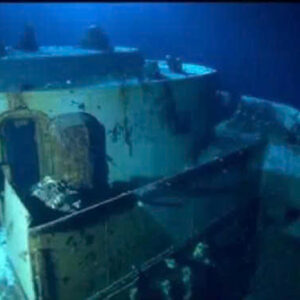
Several major earthquakes in late antiquity, including devastating seismic events in 365 CE and in the following centuries, caused significant coastal subsidence. Parts of the ancient royal quarter of Alexandria — the area known as the Brucheion or Regia, where the Ptolemaic palaces stood — have been confirmed to lie underwater in the Eastern Harbour. French underwater archaeologist Franck Goddio has conducted extensive surveys of the harbour floor since the 1990s, recovering statues, columns, and artefacts from what was once the royal district. He has not found a tomb.
Above water, medieval and modern Alexandria has been built directly over ancient Alexandria. The depth of the modern city makes large-scale excavation extraordinarily difficult and expensive. What lies beneath the streets and foundations of the contemporary city is largely unknown, because reaching it would require demolishing what is above it.

The Sema — the royal mausoleum district of ancient Alexandria, where Alexander the Great himself was buried — was located in or near the ancient city centre. Alexander’s tomb was still visible and visited by Roman emperors into the third century CE; it too has subsequently vanished. The whereabouts of Alexander’s remains are another of antiquity’s great unsolved mysteries, and both losses are connected to the same fundamental problem: the transformation of Alexandria from its ancient form into its modern one.
The Taposiris Magna Excavation
Since 2005, Dominican archaeologist Kathleen Martinez has been conducting systematic excavations at a temple complex called Taposiris Magna, located approximately 45 kilometres west of Alexandria near the town of Abu Sir on the Egyptian coast.
Martinez’s theory rests on a specific and carefully argued hypothesis. She proposes that Cleopatra, knowing that Alexandria would fall to Octavian, arranged to be buried not in the city itself — where her tomb might be desecrated by Roman conquerors — but at Taposiris Magna, a significant temple of Osiris and Isis that lay outside the city’s reach. Cleopatra had a deep identification with the goddess Isis; she presented herself as Isis incarnate throughout her reign. A burial at a major Isis-Osiris temple complex would have been theologically meaningful and, Martinez argues, strategically prudent.
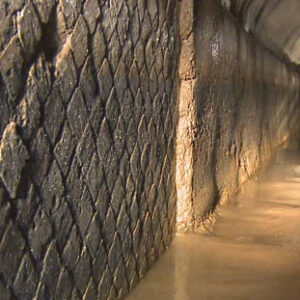
The excavations at Taposiris Magna have yielded significant finds. Coins bearing Cleopatra’s image have been recovered. Statues, including headless royal figures, have been found within the complex. Tunnels and chambers have been identified beneath the temple structure. In 2022, a significant announcement: a 1,300-metre tunnel had been discovered running beneath the sea bed near the site, its construction described as an “engineering miracle” comparable to structures at Alexandria itself.

The tunnel raised new excitement. Martinez and her team continued to argue that the tomb of Cleopatra — and possibly Mark Antony — lies within or beneath the Taposiris Magna complex.
Most Egyptologists and classical archaeologists remain sceptical. The finds at Taposiris Magna are genuine and interesting, they acknowledge, but they do not constitute evidence of Cleopatra’s presence or burial. Coins bearing her face circulated across Egypt; their presence at one site means little. The statues recovered are Ptolemaic but not definitively royal, and not definitively connected to Cleopatra specifically. The tunnel is remarkable, but its purpose has not been established.
Why the Silence Matters
The absence of Cleopatra’s tomb is not simply an archaeological inconvenience. It is a statement about how completely the Roman conquest of Egypt erased the material traces of Ptolemaic rule.
Octavian, who became Augustus, had every political reason to ensure that Cleopatra’s memory did not endure as a monument. The *damnatio memoriae* — the formal erasure of a person from public record — was a Roman political tool. While it was not formally applied to Cleopatra, the new regime had no interest in maintaining a site that might become a focus of Egyptian nationalist sentiment or commemoration of Rome’s most formidable recent enemy.
If her tomb was looted, collapsed in an earthquake, built over, or deliberately destroyed in the centuries after her death, its recovery becomes not merely difficult but potentially impossible.
There is also the possibility — seriously entertained by some researchers — that the tomb was never particularly grand. A burial made in haste, in the final days of a collapsing regime, under the watch of a Roman conqueror, may not have been the magnificent monument that Cleopatra’s status might otherwise have warranted.
The Search Continues
Excavations at Taposiris Magna continue. Ground-penetrating radar surveys of Alexandria’s harbour floor continue. Archaeological research into the ancient city’s urban geography continues.
She may be beneath the sea. She may be beneath a modern apartment building. She may be at Taposiris Magna, a few metres below a floor that has not yet been reached. She may have been found centuries ago by tomb robbers whose work left no record.
We know her name. We have her face, cast in coins that have survived two thousand years. We know the story of how she lived and how she died.
We do not know where she is.
And every season, someone somewhere is still looking.