**Hình đại diện (cover):** Ancient Sumerian bas-relief with celestial symbols and planetary diagrams carved in warm honey-coloured stone, dramatic museum lighting
Before Greece. Before Rome. Before Egypt had built its greatest pyramids. On the floodplains between the Tigris and Euphrates, in the world’s first cities, a civilization of scribes pressed small wedge-shaped marks into wet clay — and some of those marks recorded the movements of the planets with a precision that should not have been possible.
The Sumerians of ancient Mesopotamia are remembered for many things: the first writing system, the first law codes, the first cities. But perhaps the most quietly extraordinary thing they did was look up — and what they saw, and recorded, and calculated, sits at the edge of what we thought people at that stage of history were capable of.
## What the Tablets Actually Say
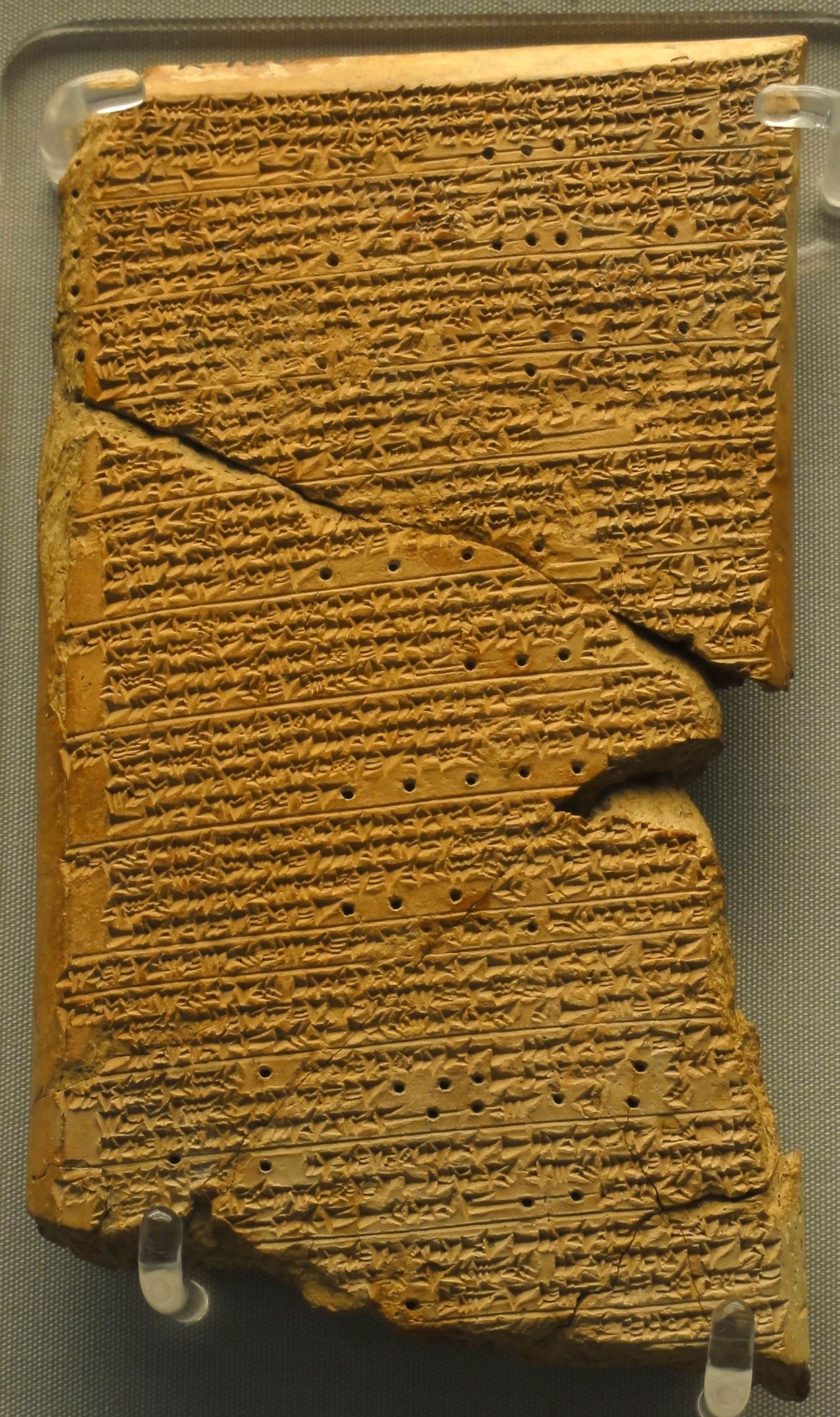
The evidence for Sumerian astronomical knowledge comes primarily from clay tablets, some dating back more than 5,000 years, discovered at sites across ancient Mesopotamia — including the great library of Ashurbanipal at Nineveh and the temple archives of Uruk and Nippur.
The most significant collection is the **Enuma Anu Enlil** — a series of roughly 70 tablets containing celestial omens, recording observations of the moon, sun, planets, and stars, and the events believed to follow from them. Associated with these is the **MUL.APIN** series, a systematic astronomical compendium describing the rising and setting of stars and constellations across the year, the paths of the moon and planets through the sky, and methods for calculating the calendar.
The **Venus Tablet of Ammisaduqa**, dating to around 1600 BCE but believed to preserve observations as much as a thousand years older, records the appearances and disappearances of Venus over a 21-year period with startling accuracy.
What these tablets reveal is a civilization that tracked the motions of Mercury, Venus, Mars, Jupiter, and Saturn — all the naked-eye planets — with systematic precision. Sumerian astronomers knew the **synodic periods** of these planets (the time it takes each to complete its apparent cycle in the sky) to within fractions of a day. They could predict lunar eclipses. They divided the sky into a 360-degree circle — a unit still used in every piece of navigation and engineering today. They divided each degree into 60 minutes, each minute into 60 seconds — the sexagesimal system that underlies every clock, every map coordinate, every artillery calculation in the modern world.

**We are still measuring time and angles with a number system invented on the banks of the Euphrates six thousand years ago.**
## What the Tablets Do Not Say — Honestly
Here is where honesty matters, because popular accounts of Sumerian astronomy often overreach the evidence.
The Sumerians did not know the Earth orbited the Sun. Their model of the cosmos was **geocentric** — Earth at the center, sky revolving around it. Heliocentrism (the understanding that the Sun, not the Earth, is the center of the solar system) was first proposed by the Greek astronomer Aristarchus around 310 BCE, and not accepted by mainstream science until Copernicus in the 16th century AD. This does not diminish what the Sumerians achieved — you can predict planetary positions with great accuracy using a geocentric model, and they did. But attributing heliocentric understanding to them misrepresents the evidence.
Similarly, claims that Sumerian tablets contain accurate maps of all nine (or eight) planets — including planets invisible to the naked eye like Uranus, Neptune, or a hypothetical additional planet — are drawn primarily from the interpretations of **Zecharia Sitchin**, a popular writer whose books, while widely read, are not accepted by mainstream Assyriologists or astronomers. Sitchin’s translations of key tablets have been repeatedly challenged by professional scholars of Akkadian and Sumerian.
What is real is extraordinary enough without embellishment. The question worth sitting with is why what they *actually* achieved keeps getting explained away or inflated beyond recognition.
## The Gods Who Taught Them the Stars
The Sumerians themselves had a clear answer for where their knowledge came from: the gods gave it to them.
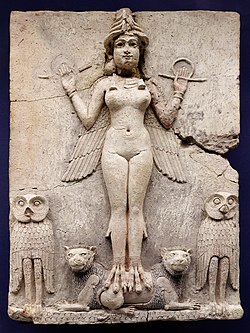
The Anunnaki — the great deities of the Sumerian pantheon — were believed to have descended from the heavens and established civilization on Earth. Specific gods were associated with specific celestial bodies: **Inanna** (later Ishtar) was Venus, tracking her disappearances and returns as a cosmic story of death and resurrection. **Sin** was the Moon, father of time. **Shamash** was the Sun, god of justice and the all-seeing eye.
Whether you read these as mythology, metaphor, or something else entirely depends on your interpretive framework. What is archaeologically certain is that the Sumerians encoded their astronomical observations within their religious system so thoroughly that separating the two is nearly impossible.
The famous **Rod and Ring** symbols carried by Sumerian deities in relief carvings — which some modern commentators have described as resembling DNA helices or surveying tools — are more conventionally interpreted by scholars as symbols of divine measurement and justice: the rod for measuring, the ring for completeness. The resemblance to modern scientific imagery is striking. Whether it is meaningful or coincidental is genuinely contested.
The **caduceus** — the staff of entwined serpents used as a medical symbol today — does appear to have ancient Mesopotamian roots, connected to images of the god Ningishzida and serpent imagery in Sumerian and Akkadian religion. The precise line of transmission to Greek and then modern medicine is complex, but the connection is real, not invented.
Why It Still Unsettles Us

The honest answer to why Sumerian astronomy is so impressive is the same answer that applies to most of what the Sumerians did: **they had more time than we give them credit for.**
Jericho is 11,000 years old. Göbekli Tepe is 12,000. Sedentary human communities, watching the same sky night after night, generation after generation, for thousands of years, accumulate knowledge at a rate that is genuinely difficult to intuit. If every generation of Sumerian priests added one careful observation to a tradition already centuries old, the result, over millennia, would be a body of astronomical knowledge that appears impossibly sophisticated to anyone who assumes it was gathered quickly.
The answer to how they knew so much is not necessarily mysterious: they watched, they recorded, they calculated, and they stood on the shoulders of generations of people who did the same before them.
What remains genuinely remarkable — and genuinely unexplained — is not the source of their knowledge but its precision. The margin of error on some of their planetary period calculations is fractions of a percent. The size of their number system’s base — 60 — turns out to be mathematically ideal for calculations involving fractions and cycles, in a way that may not have been obvious when they chose it.
Were they simply better observers than we assume? Were they working with a tradition even older than we’ve traced? Did they receive help from somewhere — from teachers, from texts now lost, from sources we haven’t identified?
The gods are gone. The tablets remain. And on them, written in the oldest writing system on Earth, is the record of people looking at the same sky we look at tonight — and understanding it, in their way, more deeply than we’ve given them credit for.
What else did they know that we haven’t found yet?