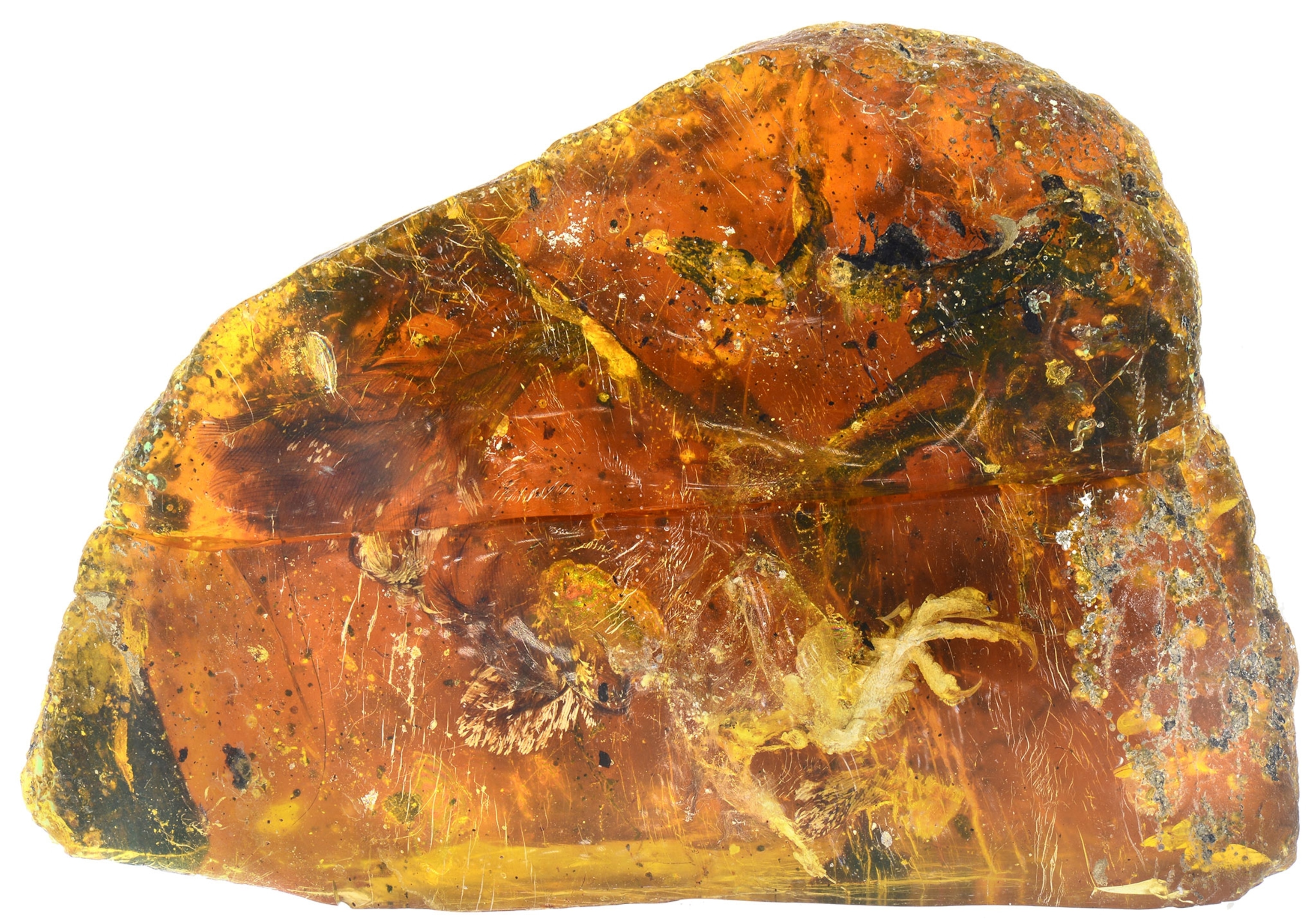
It was only days — maybe a couple of weeks — old when a drop of sticky tree resin caught it and never let go. The resin hardened into amber. The forest fell, the dinosaurs died, and 99 million years passed. When researchers finally scanned the little golden lump, they found something they never expected: not just a scrap of a wing, but nearly half of a baby bird — head, feathers, skin, a clawed foot — and a secret about how it lived.
What could a hatchling this small tell us that a whole skeleton could not?
What We Were Told
Baby birds, we assume, are helpless. Blind, featherless, mouth open in the nest, utterly dependent on their parents for days or weeks before they can do anything at all. That is how most modern birds begin. And fossils are supposed to keep only the hard parts — bone turned to stone. The soft truth of a hatchling’s first days, its down and skin and the exact state of its feathers, is precisely what we’re told the deep past never preserves.
What Was Found
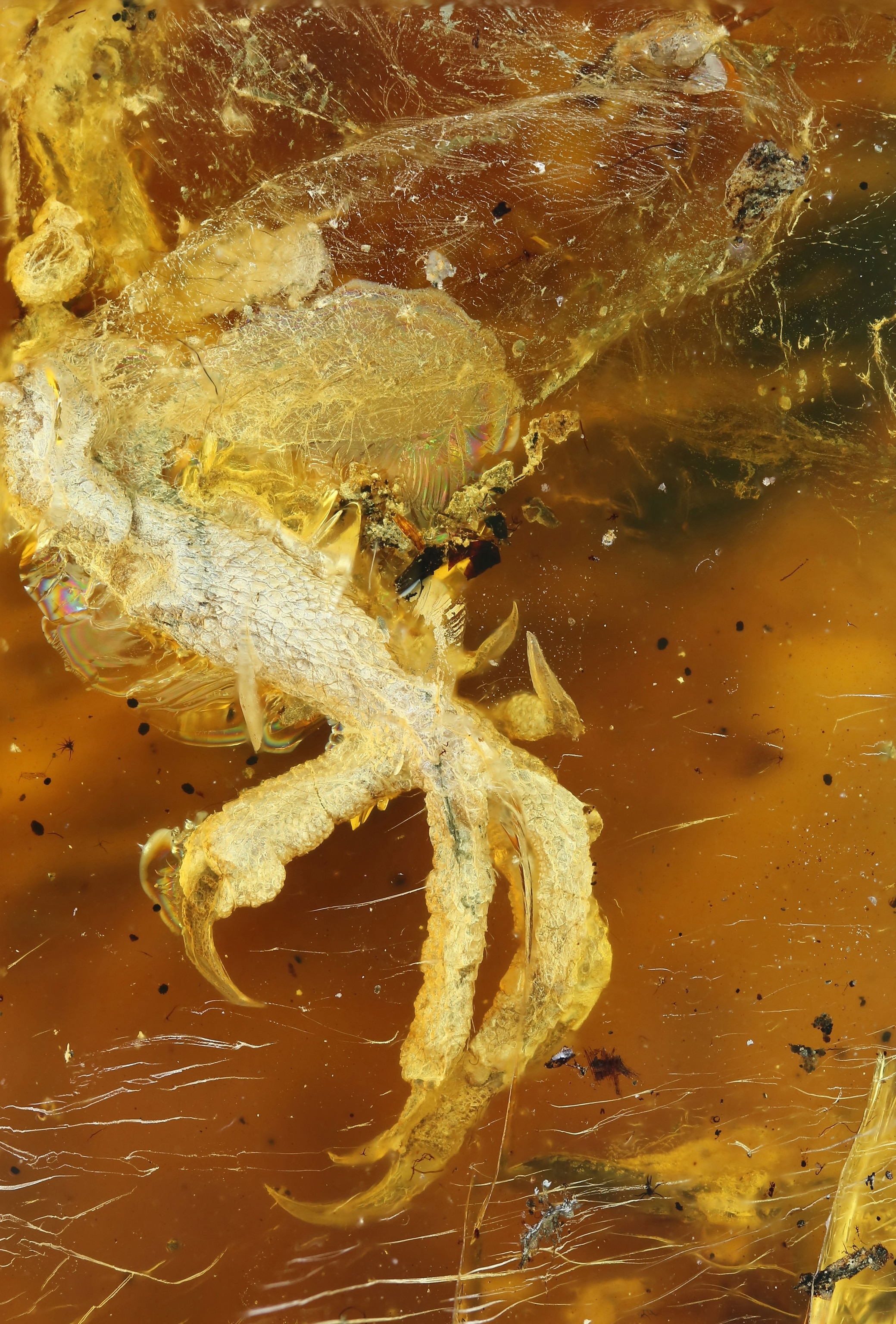
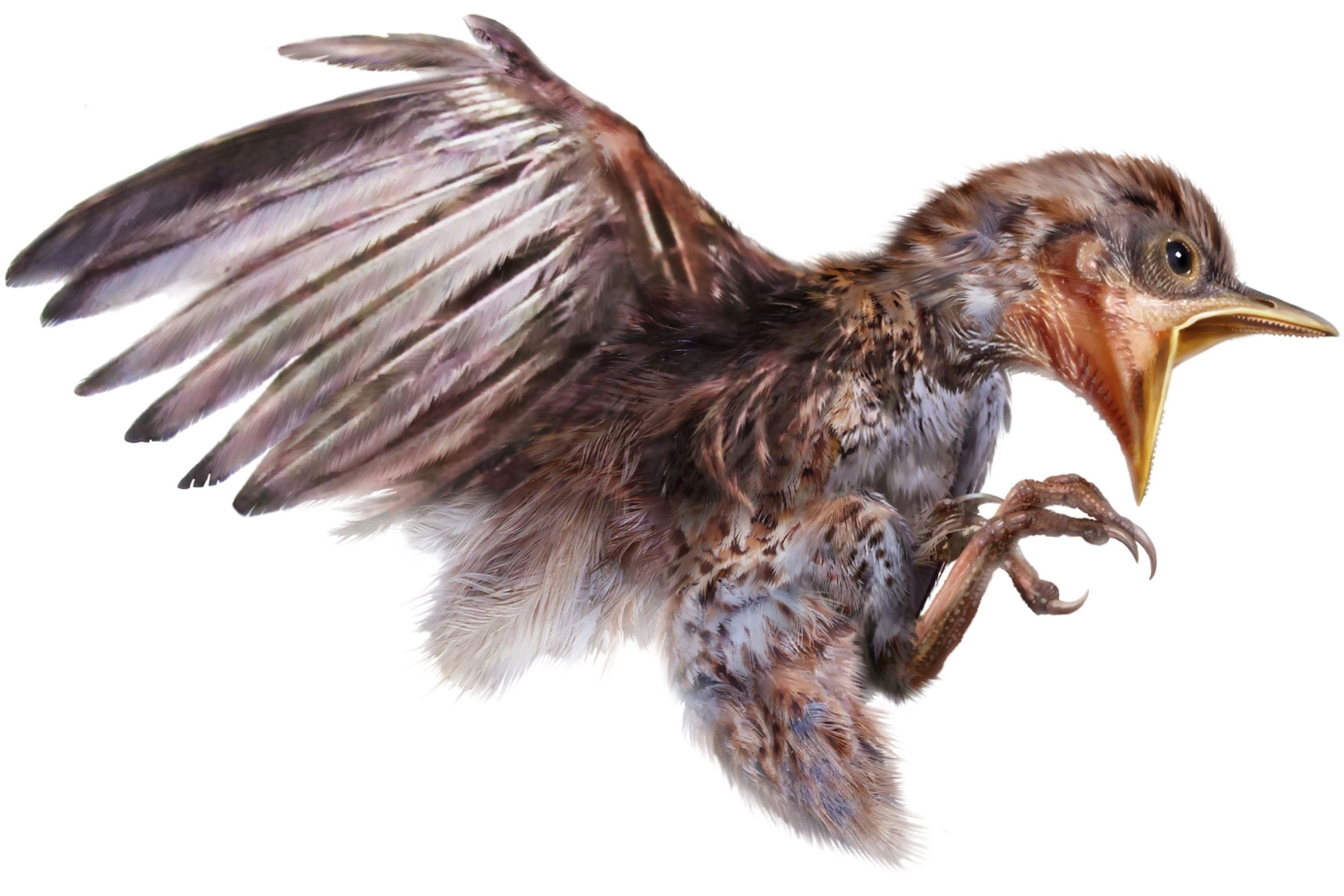
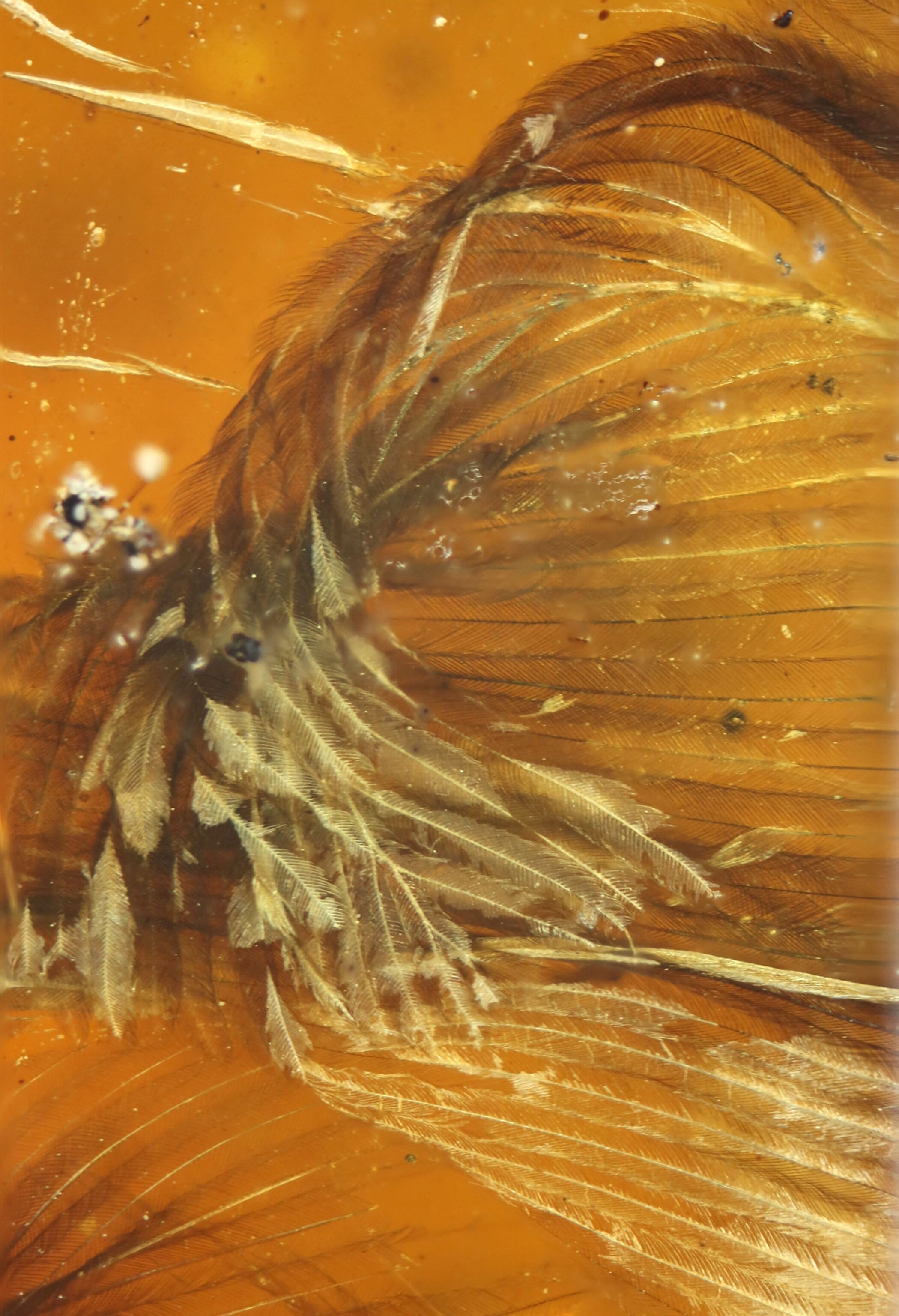
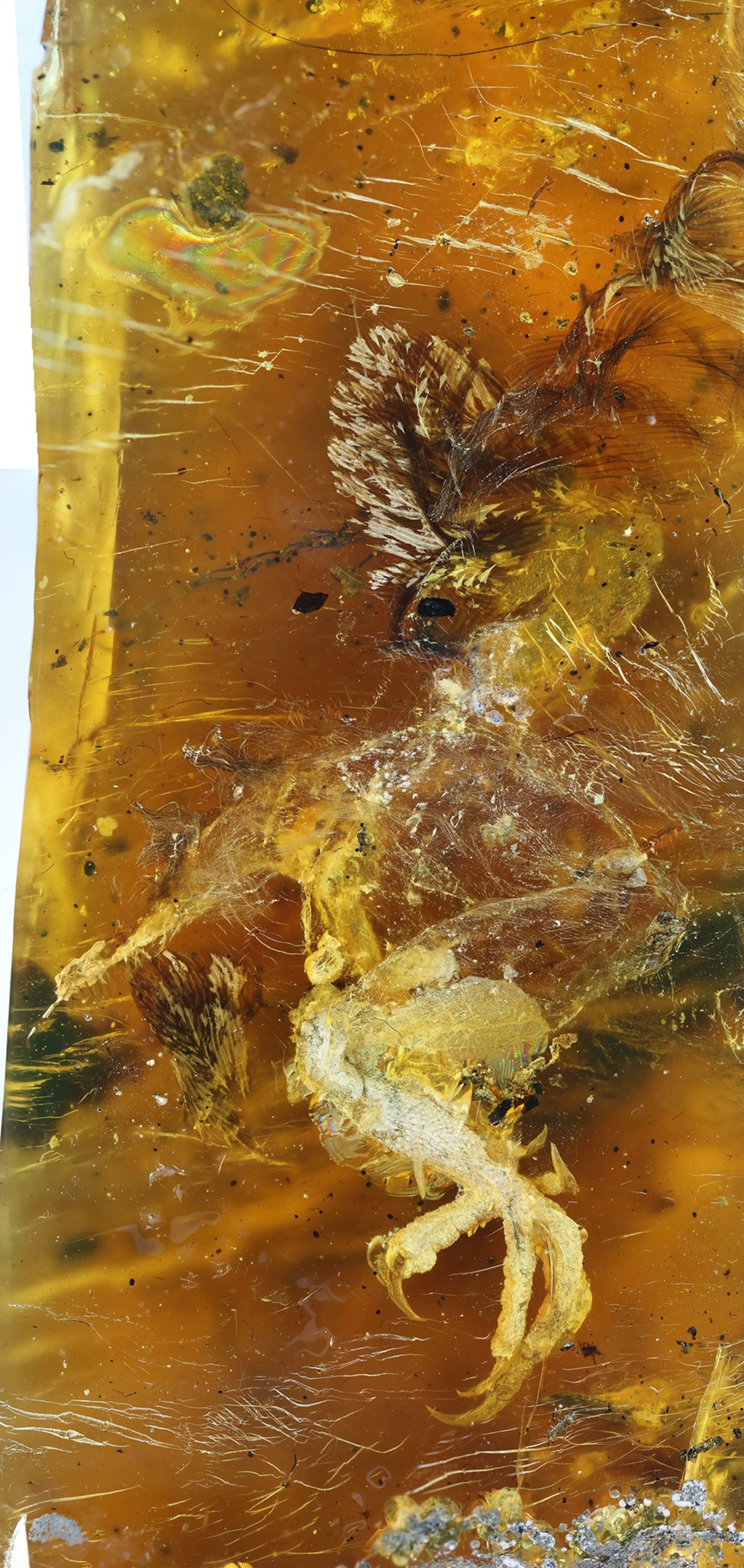
In 2017, a team co-led by paleontologists Lida Xing (China University of Geosciences) and Ryan McKellar (Royal Saskatchewan Museum) described an extraordinary specimen in the journal Gondwana Research. Sealed in a piece of 99-million-year-old Burmese amber — barely three inches long — was a hatchling bird, its remains nearly half complete: head, wings, skin, feathers, and a clawed foot visible to the naked eye. Its feathers still held color, ranging from white and brown to dark grey.
The researchers nicknamed it “Belone,” after a Burmese name for the amber-hued Oriental skylark. And its origin is a story in itself: the amber was bought in Myanmar in 2014 by museum director Guang Chen, who’d heard of a sample with a strange “lizard claw” inside. Only after CT scanning did the truth appear. “I thought we had just a pair of feet and some feathers,” Xing said. “It was a big, big, big surprise after that.”
The Detail That Changes Everything
Here is the twist. When the scans mapped the wings, the baby already had a full set of flight feathers — even though the rest of its plumage was still sparse and primitive, closer to the fuzz of a feathered dinosaur. In other words, this bird was born able to fly, or nearly so, within its first days of life. It didn’t need to wait, helpless, in a nest. It hatched almost ready for the air — a strategy utterly unlike the songbirds outside your window.
The Central Mystery
That independence carried a hidden price, and it points to a puzzle. Belone belonged to the enantiornithines — an ancient group of birds that lived alongside the dinosaurs, many with teeth and clawed fingers on their wings — and they grew slowly. A slow-growing chick that leaves the nest early is exposed to the world for a long, dangerous stretch. Tellingly, the fossil record holds an unusually high number of juvenile enantiornithines, while almost no baby birds of any other Cretaceous lineage have ever been found. Did their “born to fly, but slow to grow” gamble make the young especially likely to die — and did it help doom the whole group when the world changed?
Competing Theories
Researchers are confident Belone is a young enantiornithine born with flight feathers, but the finer points remain open: its exact age, precisely which species it was, and how much the amber has shrunk or distorted the tissues over 99 million years. There’s also an honest complication that deserves naming. Burmese amber is mined in the Hukawng Valley of northern Myanmar, a region tied to armed conflict and unregulated mining — which is why many scientists have raised serious ethical concerns about how these dazzling specimens are collected and sold. The science is breathtaking; the sourcing is genuinely troubled.
Why It Still Haunts Us
Enantiornithines vanished with the dinosaurs around the end of the Cretaceous, and not one living bird descends from them. So Belone isn’t an ancestor — it’s a face from a lineage that was completely erased. What makes it unbearable is the intimacy: a specific baby, caught in a specific week of its short life, still wearing its own feathers, still holding the pose it died in. It turns extinction from an abstraction into something tender and personal — one small creature that hatched knowing how to fly, and never got the chance to grow up.
If a single drop of sap can keep a hatchling’s face for a hundred million years, what will survive of the small, living moments of our own world?
Sources & further reading: Xing, McKellar et al., “A mid-Cretaceous enantiornithine bird in Burmese amber,” Gondwana Research (2017); National Geographic reporting; general references on enantiornithine birds and documented ethical concerns about Burmese amber from the Hukawng Valley, Myanmar.