It was only when archaeologists performed CT scans and DNA testing that the horrifying secret hidden behind the 3,000-year-old remains came to light.
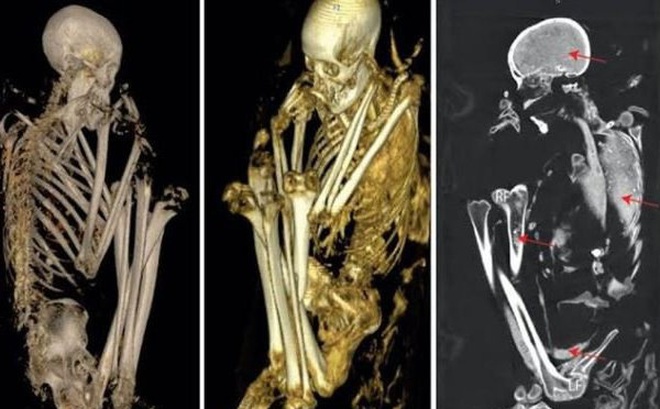
Not long ago, scientists at Shegfield University discovered two 3,000-year-old bodies lying in a fetal position when they were unearthed beneath the tiled floor of an ancient house in the Hebrides Islands, Scotland.
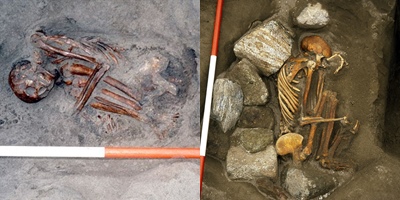
Images provided by scientists.
It is known that these two bodies were embalmed using a natural method.
Soaking corpses in an environment with low oxygen levels and high acidity, such as swamps, inhibits bacteria that decompose organic matter, helping to preserve the remains intact for extended periods.
Experts at the University of Manchester believe these mummies had been submerged in the swamp for hundreds of years before being recovered and reburied beneath the ancient house.
However, archaeologists were shocked to discover that this was not the intact body of a single person!
The anatomical discrepancies between the two mummies left a major question for the archaeological team, forcing experts to seek answers through DNA testing. The DNA results shocked the archaeologists; the bones of the 3,000-year-old bodies did not belong to the same person.
Parts such as the jawbone, skull, arms, and legs of the female mummy show that these were entirely body parts from different people grafted together.
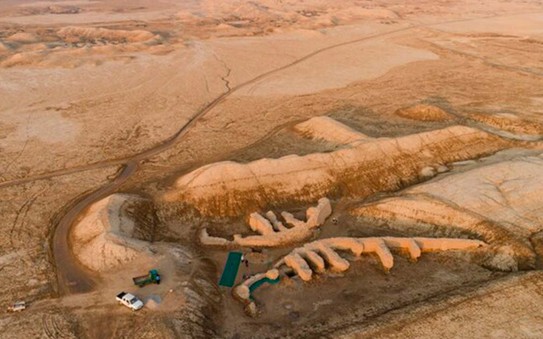
The male mummy, however, had a neck and head that were not connected.
Could humans have performed organ transplants or limb replacements 3,000 years ago, given that these two mummies are the result of a patchwork of parts from six different people?
One theory suggests that the reattachment of other body parts to the two mummies may have been due to the deceased not having all their limbs intact, and the missing parts were added as a replacement.
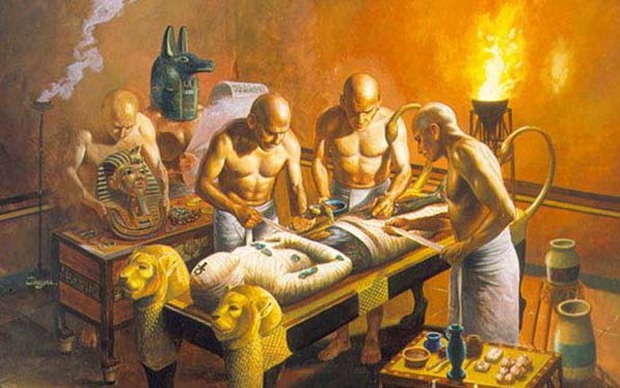
It is highly likely that these two mummies were used for ritual purposes. It cannot be ruled out that the local people merged the remains into a single skeleton to represent a village or community.