Deep in the barren deserts of southern Peru, where almost no rain has fallen for centuries, a woman sat waiting in silence for nearly 2,000 years.
When archaeologists finally encountered her remains, they found something astonishing.

Her hair was still there.
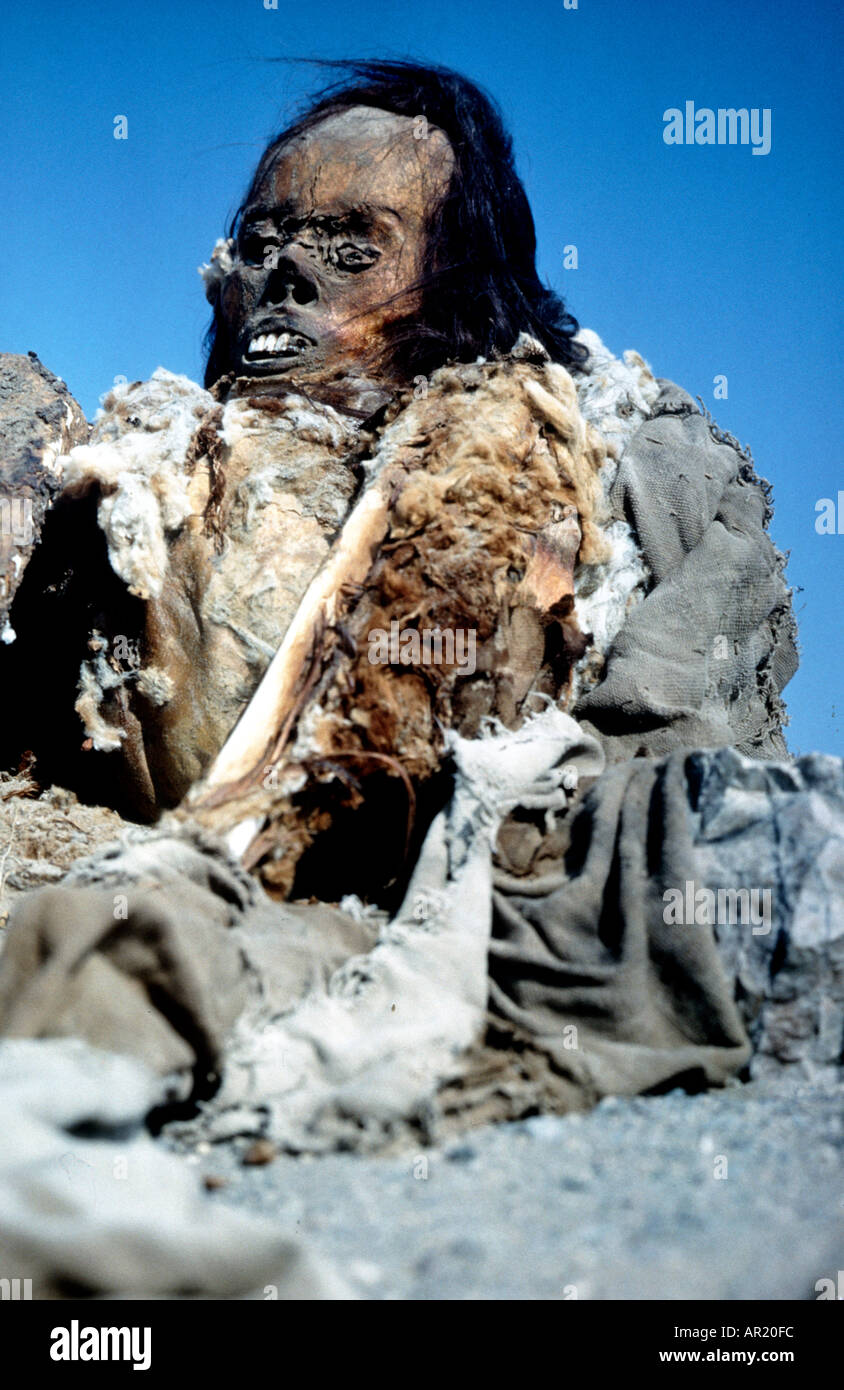
Long strands of reddish hair cascaded down her shoulders, still tied with ancient fabric ribbons. The skin had shrunk against the bone, yet much of it remained intact. Time itself seemed to have stopped.
She was one of the mysterious mummies discovered at the Chauchilla Cemetery, an ancient burial ground associated with the Nasca civilization, a culture that flourished along Peru’s southern coast between roughly 100 BCE and 800 CE.
But what makes this discovery so haunting is not simply the age of the remains.
It is the feeling that the desert never truly let her go.
For centuries, the dead of Chauchilla rested beneath layers of sand in one of the driest environments on Earth. The region receives almost no rainfall, and its mineral-rich soil naturally preserved human bodies without the need for elaborate embalming.
Hair survived.
Skin survived.
Textiles survived.

Even traces of soft tissue remained after nearly two millennia.
The result was a collection of mummies so remarkably preserved that they seemed frozen between worlds—neither fully alive nor completely surrendered to history.
Yet the story becomes darker.
Long before archaeologists arrived, grave robbers had already found the cemetery.
Armed with shovels and greed, looters tore open ancient tombs, scattering bones across the desert floor. Precious pottery vanished into private collections. Burial bundles were ripped apart. Sacred resting places that had survived centuries of wind and sand were destroyed in a matter of hours.
Many of the mummies visible today were once carefully protected deep underground.
Now they sit exposed beneath the desert sky, silent witnesses to both ancient ritual and modern destruction.
Who was the woman with the red hair?
No one knows for certain.
The Nasca people buried their dead with extraordinary care. Bodies were wrapped in woven cotton textiles and placed in seated positions inside specially prepared tombs. Offerings often accompanied them into the afterlife—ceramic vessels, food, tools, and sometimes even trophy heads connected to religious beliefs and ceremonial practices.

Some researchers believe hairstyles may have reflected identity, family connections, or social status. Others caution that we simply do not have enough evidence to know exactly what the ribbons in her hair signified.
The mystery remains.
What we do know is that her hair survived where entire civilizations vanished.
It survived empires.
It survived earthquakes.
It survived centuries of desert winds.
It survived the collapse of the culture that buried her.
And somehow, after nearly 2,000 years, it still carried traces of the person she once was.
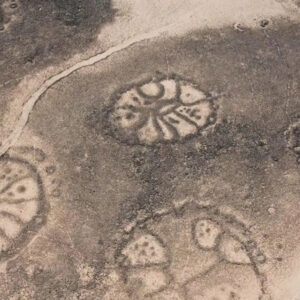
The Nasca civilization is best known for creating the legendary Nasca Lines—gigantic geoglyphs etched into the desert that can only be fully appreciated from the sky.
Yet perhaps their greatest mystery lies not in the shapes they drew across the landscape, but in the people they left behind.
Because standing before one of these mummies is not like looking at a skeleton.
It feels like looking at a memory.
A face weathered by centuries.
A hairstyle preserved by nature.
A life interrupted by time.
The desert protected her story for almost two thousand years.
The looters nearly erased it forever.
And now, all that remains is a woman with red hair, ribbons still tied in place, staring silently across the centuries from one of the most haunting archaeological sites on Earth.
A forgotten daughter of Nasca.
A cemetery of the dead.
And a desert that refuses to forget.