A parent that never left. A nest that never hatched. And a fossil that, researchers say, finally proves dinosaurs cared for their young.
It sounds like the opening of a film. It isn’t. It’s a real fossil, pulled from 70-million-year-old rock — and once you understand what you’re looking at, it’s hard to forget.
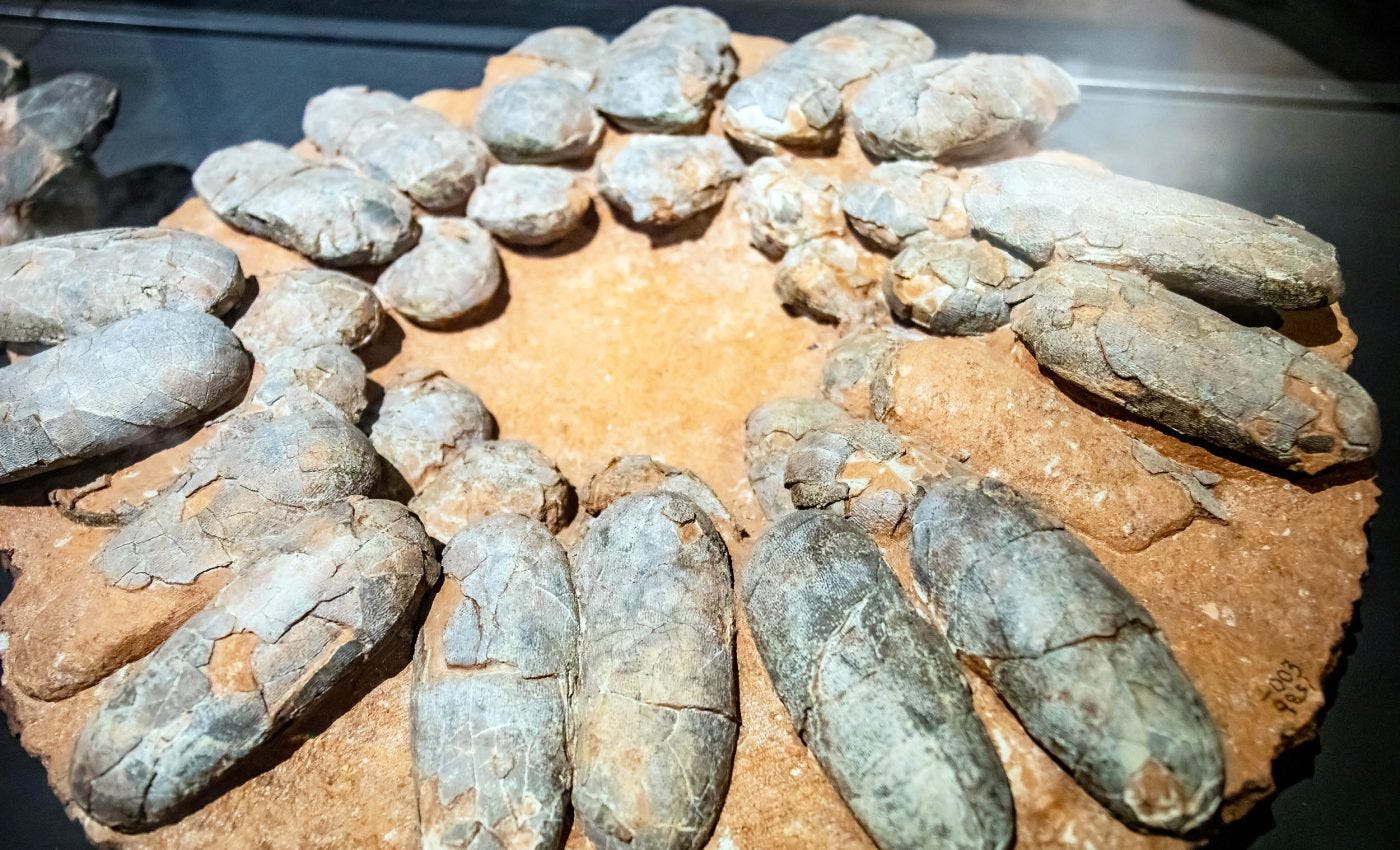
An adult dinosaur, preserved in stone, crouched over a nest of at least 24 eggs. Arms spread wide. Body lowered over the clutch. Caught, it seems, in the exact moment of doing the most ordinary and extraordinary thing in the world: protecting its babies.
What they actually found
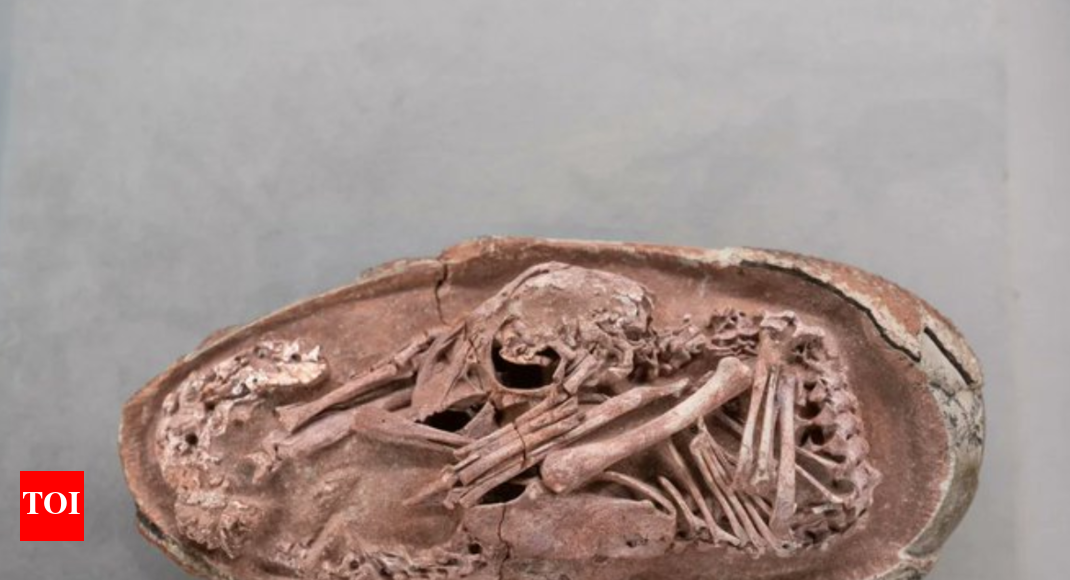
The specimen was uncovered at Ganzhou, in southern China, and described by a team including the Carnegie Museum of Natural History. It belongs to an oviraptorosaur — a feathered theropod, a distant cousin of Velociraptor.
According to the researchers, the adult sits directly above the nest, its limbs folded around the eggs, in a posture strikingly like a modern bird settling over its clutch. And the eggs weren’t empty. At least seven of them still held the remains of embryos — babies that were, astonishingly, close to hatching.
That single detail changes everything. It means this wasn’t a one-night sit. The parent had been tending the nest long enough for the young inside to develop. This was commitment.
Frozen in the act
What turns a remarkable fossil into a haunting one is the *pose*.
Most fossils are scattered, jumbled, rearranged by time. This one was caught mid-moment — still in position, still over the eggs, as if the last 70 million years simply paused around it.
How does that happen? No one can say with total certainty, but scientists suspect a sudden disaster — perhaps a collapsing dune or a surge of mud — that buried the animal alive, too fast to flee, while it was still brooding. Whatever it was, it sealed the scene exactly as it stood.

**This parent died on the job. Still guarding. Still waiting. For 70 million years.**
The “egg thief” who was no thief at all
Here’s the twist that gives the story its sting.
For most of a century, this kind of dinosaur carried a slur in its very name. “Oviraptor” literally means “egg thief.” The label was pinned on after early fossils were found near clutches of eggs, and scientists assumed the worst: a robber, caught raiding another animal’s nest.
They had it backwards. Fossils like this one suggest those eggs weren’t stolen at all — the dinosaurs were sitting on their own. The “thief” was, in all likelihood, a devoted parent that died defending its family.
What if one of the earliest pieces of evidence for dinosaur parenting was misread for decades, simply because we assumed an ancient animal must be a villain?

A nest built like a bird’s
Look closer at the eggs and it gets stranger still.
Researchers describe them as carefully arranged — laid in pairs, set in neat concentric rings around an open center, the same elegant pattern you’d find in many modern bird nests. This wasn’t a random pile. It was deliberate, structured nesting behaviour.
The implication is quietly staggering: complex nest-building and brooding may have evolved in dinosaurs long, long before the first true birds ever took to the sky. The tenderness we think of as so *bird-like* might actually be far older than birds themselves.
Why a 70-million-year-old fossil still stops us cold
We tend to picture dinosaurs as engines of teeth and violence. This one asks us to picture something else entirely: patience, care, sacrifice.
Strip away the scales and the deep time, and the scene is heartbreakingly familiar — a parent curled protectively over its children, refusing to move even as the world came down around them. It’s a reminder that some instincts are older than humanity, older than birds, older than almost anything we can imagine.
So here’s the thought worth sitting with: if devotion like this was already written into life 70 million years ago… how much of what we call “human” was never really ours to begin with?