It was supposed to be an ordinary building site. One hundred and twenty-four new homes, eighteen acres of quiet Kent farmland, a stretch of England most people only ever see blurring past from the A2.
Then the diggers hit stone. And the ground, it turned out, had been keeping an enormous secret.
Beneath the grass lay the remains of an entire Roman town — streets, a temple, workshops, the scattered belongings of people who lived and traded here nearly two thousand years ago. And what happened next is almost as haunting as the discovery itself.
A town that wasn’t supposed to be there
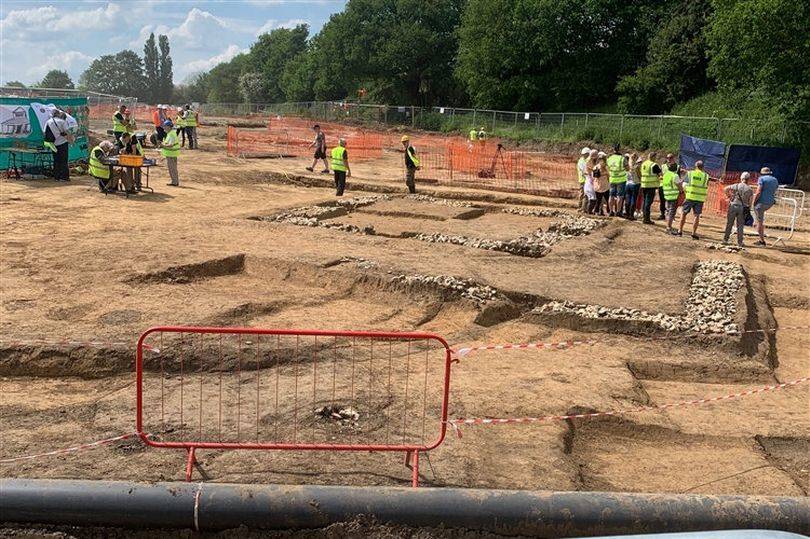
The find came at Newington, near Sittingbourne, when construction crews preparing the housing plot reportedly came upon nearly 2,000-year-old ruins just inches beneath the soil.
What surfaced wasn’t a single villa or a stray mosaic. According to the archaeologists who rushed in, it was a whole settlement — and a surprisingly wealthy one. The kind of place that had a temple, a road system, industry, and a taste for imported luxury.
For a quiet village beside a modern highway, it was the discovery of a lifetime. And the clock was already ticking.
Thirty archaeologists, eight months, one race against the diggers
A team said to number around 30 archaeologists spent roughly eight months carefully peeling back the centuries before the development moved ahead.
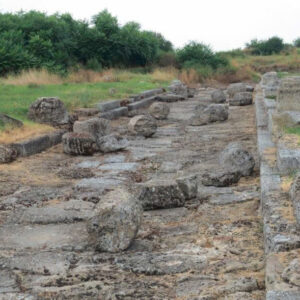
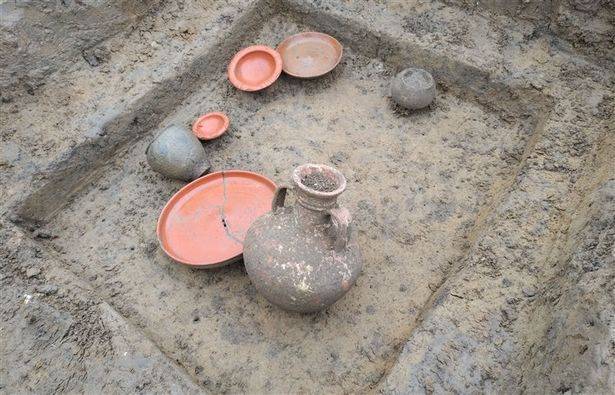
What they recorded reads like a Roman town brought briefly back to life: rare coins, pottery and jewellery dating to as early as 30 BCE, the footprint of an ancient temple, a road around 23 feet (7 metres) wide, sunken pottery kilns and rare iron furnaces. The kilns and furnaces hint that this wasn’t just a place to live — it may have been a place that made things, a working town with smoke in the air.
For two thousand years a Roman town slept under a Kent field — and we found it just long enough to say goodbye.
What 2,000 years had been hiding
The luxury is what lingers. Numerous costly items imported from other regions suggest the people here were, by the standards of Roman Britain, of fairly high status — not a forgotten backwater, but somewhere connected, prosperous, plugged into a trade network that spanned an empire.
“The temple and major road are massive discoveries,” Dean Coles, chairman of the Newington History Group, is quoted as saying. “It proves the A2 wasn’t the only Roman road through the village.”
Dr Paul Wilkinson, archaeological director at the Swale and Thames Archaeological Survey, reportedly called it “one of the most important discoveries of a Roman small town in Kent for many years,” with the preservation of Roman buildings and artefacts described as exceptional.

The lost town with a forgotten name
Here’s where it tips from remarkable into genuinely mysterious.
For generations, historians have argued over the location of a lost Roman station called Durolevum — a place named in ancient records but never pinned to the map. And some experts have wondered aloud whether Newington could finally be it.
No one can say for certain. The identification remains debated, the evidence circumstantial. But imagine it: a town whose name echoed down the centuries in old documents, its location a puzzle for scholars — possibly resurfacing under a field earmarked for a housing estate.
If it’s true, a 2,000-year-old riddle may have been hiding in plain sight all along.

Found… and then deliberately buried again
And now the part that stops people cold.
Once the analysis is done, much of the site is to be covered back over so the housing project can continue. The town that waited two millennia to be seen will, in large part, be returned to the dark — this time beneath foundations and front gardens.
“This is one of the most significant sites in Kent,” project manager Peter Cichy is quoted as saying, “but it’s only the beginning of months and months of work. We will be analysing and dating our finds, sorting and piecing together thousands of pottery shards, and writing up our report.”
It’s not all loss. The temple stones, reportedly, were rescued — lifted and rebuilt a short distance away so the public could one day stand before them. But the wider town? For now, it slips back underground, its fullest secrets sealed for another generation.
Why a field in Kent still matters
It’s easy to think of “lost cities” as something that only happens in jungles and deserts, far away and long ago. Newington is a reminder that the past can be lying directly beneath the most ordinary places we know — a field, a road, the plot where someone’s new kitchen will soon stand.
Every shard the team lifts is a tiny window into people who laughed, worked, prayed and traded here twenty centuries before us. And the strangest thought of all is how close it came to never being seen — and how quietly it will disappear again.
So here’s the question worth sitting with: how many more lost towns are still down there, sleeping under fields we walk across every day — waiting for a digger to find them, or never to be found at all?