You know Chianti for red wine. The dark bottles, the rolling Tuscan hills, the Sangiovese grape. It is one of the most recognisable wine regions on Earth — and it has been synonymous with red for as long as most people can remember.
Here is what the earth just told us: for more than six centuries before any of that, the dominant grape growing in that same soil produced white berries, not red.

Seeds in the mud
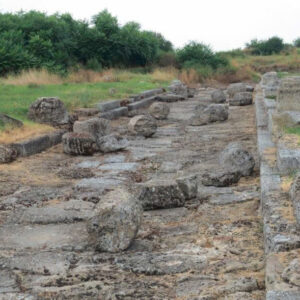
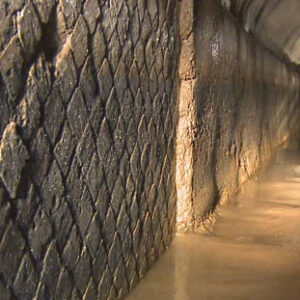
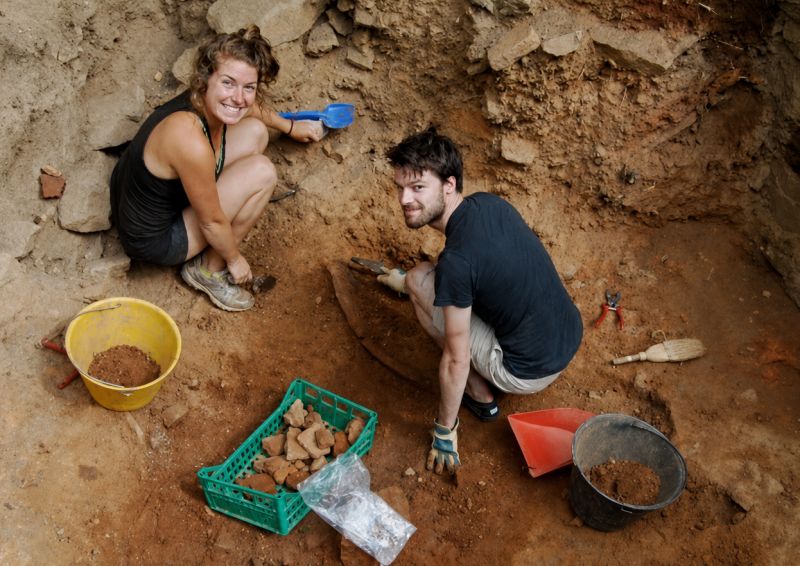
The evidence came not from a vineyard but from a well — several of them, in fact, dug in the ancient Etruscan and Roman settlement of Cetamura del Chianti in Tuscany. Over the centuries, organic material fell into those wells and was sealed in oxygen-free mud, where it was preserved with remarkable fidelity.
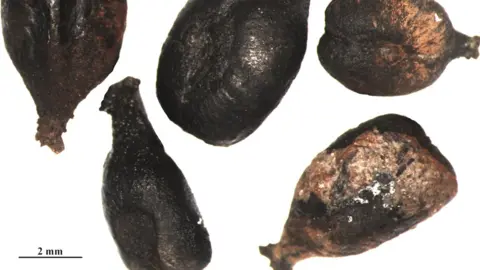
Scientists recovered 80 grape seeds from layers deposited between 300 BCE and 300 CE — a span of six centuries that covers the end of Etruscan civilisation and the height of Roman occupation. They sequenced the DNA of those seeds. What they found rewrote the region’s history.
The dominant grape variety — the one that appeared again and again across the samples — produced white berries. It had been cultivated in the Chianti hills for at least 362 years without interruption, passed directly from the Etruscans to the Romans essentially unchanged. No hybridisation, no replacement. Generation after generation, the same white grape.
**The land now famous for red wine had, for centuries, never known it.**

A living thread across 2,300 years
One of the seeds from the same well belonged to a grape family with a remarkable living relative: the oldest known grapevine still producing fruit on Earth, growing in Maribor, Slovenia. That vine is more than 400 years old and still yields grapes today. The seed from Chianti’s ancient mud connects the winemaking of Iron Age Tuscany to a living plant you can visit right now.
It is the kind of detail that makes deep time suddenly feel very small.
The Etruscans and their wine
The Etruscans — the civilisation that preceded Rome across much of central Italy — were serious winemakers. They cultivated vines, traded wine across the Mediterranean, and passed their viticultural knowledge directly to the Romans who absorbed and eventually replaced them. The Cetamura seeds show just how literal that inheritance was: not just the knowledge, but the exact same variety, handed from one civilisation to the next without modification.
For the Romans, wine was not merely a drink. It was woven into religion, medicine, trade, and daily life at every social level. The fact that their Chianti wine was white — light, made from pale berries on Tuscan hillsides — reframes what we think we know about how ancient Italian wine tasted and looked.
What changed?
The study does not pinpoint the exact moment red grapes took over in Chianti. That shift happened gradually across the medieval period, as European winemaking evolved and preferences changed. The Sangiovese grape — the backbone of modern Chianti Classico — came to dominate the region over centuries of selection and replanting that erased almost all trace of what came before.
Almost all trace. Because the seeds in the mud of those old wells kept the record.
Why this matters beyond wine
Archaeobotany — the study of ancient plant remains — is quietly rewriting history in ways that feel almost miraculous. A handful of seeds, sealed in anaerobic mud for over two thousand years, can tell us which crops dominated a landscape, how agricultural knowledge moved between cultures, and how the plants we grow today connect to varieties that fed people in the Iron Age.
In the case of Chianti, those seeds did something else: they reminded us that the identities we attach to places are not fixed. A landscape famous for one thing was, for just as long, famous for something entirely different — and only an accident of preservation let us find out.
The hills of Chianti have been making wine for more than two thousand years. For most of that time, it was white.
*Sources: DNA sequencing study of grape seeds, Cetamura del Chianti (300 BCE – 300 CE); Maribor Old Vine documentation.*