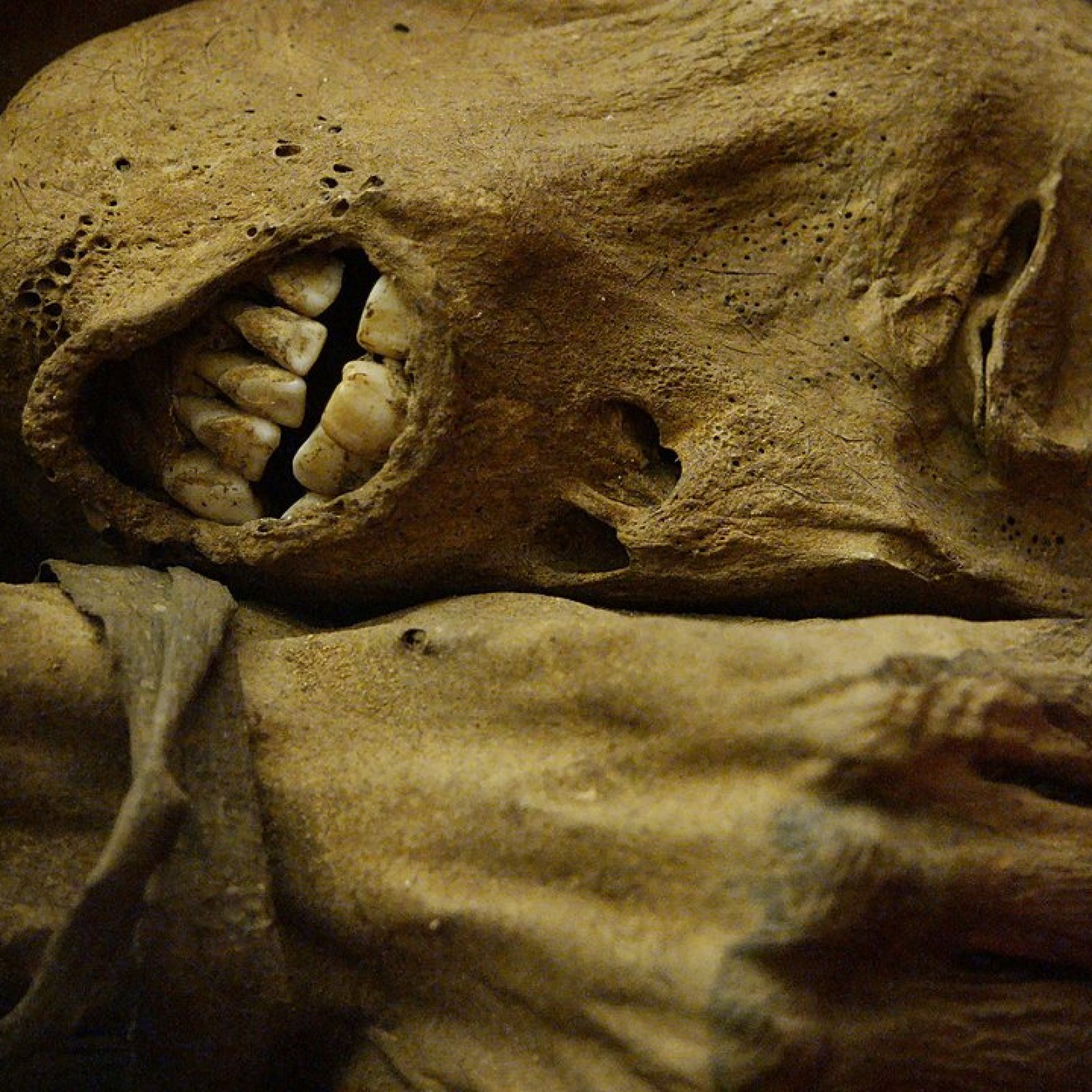
In late 2021, in the quiet ground of an ancient town near Lima, a small team of archaeologists carefully cleared away centuries of soil and uncovered something profoundly human. Folded tightly into the position of an unborn child, wrapped and bound with rope, lay the body of a young person who had died around a thousand years ago.
The hands were raised, covering the face. It is an image that stops you in your tracks — not because it is frightening, but because it feels so intimate, so deliberate. This is the Cajamarquilla mummy, and it offers a rare and tender glimpse into how the people of ancient Peru honoured their dead long before the rise of the Inca.

A discovery beneath the plaza
The find was made in November 2021 at Cajamarquilla, an extensive archaeological site that sits roughly 25 kilometres inland from Lima. The excavation was led by archaeologists from the Universidad Nacional Mayor de San Marcos, including Pieter Van Dalen Luna and Yomira Huamán Santillán.
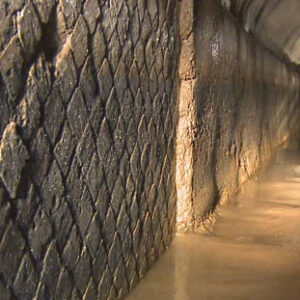
What the team uncovered was not a simple grave. The body had been placed in an underground tomb, reached by a staircase of around seven steps descending beneath what had once been an open space within the settlement. Everything about the setting suggests care and intention. This was not a body discarded; it was a person laid to rest within the heart of a community, in a chamber prepared for them.
Around a thousand years of silence had passed before that chamber was opened again.
A young life, gently preserved
Studies of the remains indicate that the mummy was a young man, likely between eighteen and twenty-two years old at the time of his death. Estimates for the age of the burial range from roughly 800 to 1,200 years, placing his life firmly in the era before the Inca Empire rose to dominate the Andes.
It is worth pausing on that simple fact. This was someone young — barely more than the age of a modern university student — whose body was prepared with evident reverence and then sealed away. We do not know his name, his story, or the cause of his death, and it would be wrong to invent them. What survives is not a tale of drama but the quiet evidence of a life that was valued, mourned and ritually honoured by those who knew him. In that sense, the silence surrounding him is not an emptiness to be filled, but a form of respect — a reminder that not every story from the deep past is ours to embellish, and that some of the most powerful ones ask only to be witnessed.
Bound in rope, hands over the face
The most striking detail of the burial is its posture. The young man was placed in a tight foetal position and bound with ropes that held his body in that crouch, with his hands brought up to cover his face.
To modern eyes this can look startling. But researchers interpret it not as something sinister, but as a recognised funerary custom — a way of preparing and positioning the dead that appears to have been practised in parts of southern Peru at the time. Across many ancient cultures, the foetal position carried deep symbolic weight, echoing birth and suggesting ideas of return, rest or rebirth. The ropes and the careful arrangement were almost certainly part of a sacred ritual, a prescribed and respectful way of sending someone into the next stage of existence.
**Seen in that light, the binding is not a horror. It is an act of tenderness — the careful, ceremonial hands of a community wrapping one of their own for a journey they believed in.**

Offerings for the journey
The respect shown to the young man did not end with his burial. Beside his remains, archaeologists found grave goods chosen to accompany him: a boleadora, a type of stone throwing weapon; a mate, or plate; and a copper needle. These were everyday and meaningful objects, the kind a person might need or value, placed with him as he was laid to rest.
But perhaps the most moving discovery lay just outside the tomb. There, researchers found marine mollusc shells and the bones of llamas. The likeliest explanation is that, over many years, the young man’s descendants and community returned to this place to leave food and offerings — gifts for the dead, renewed across generations. If so, this was not a single farewell but a relationship maintained over time: the living continuing to care for, feed and remember someone they had lost.
That image — of families returning again and again to honour an ancestor sealed beneath their feet — speaks to a bond with the dead that feels both ancient and deeply familiar.
A crossroads of coast and mountains
The presence of those marine shells carries a second meaning, one that reaches beyond a single grave. Cajamarquilla sits about 25 kilometres from the Pacific coast, and yet shells from the sea were brought here and left as offerings. That small detail opens a much larger window.
Cajamarquilla was once a thriving, multi-cultural hub — a place where the highland world of the Andes met the goods and peoples of the coast. The seashells are tangible proof of trade and connection: products of the ocean carried inland and woven into the rituals of a community far from the shore. As Pieter Van Dalen Luna noted, discoveries like this one help shed new light on the interactions and relationships of pre-Hispanic times. A young man’s tomb thus becomes a thread in a far wider story of commerce, movement and contact across ancient Peru.

Why these discoveries matter
It can be tempting to treat ancient remains as objects of mere curiosity. But the Cajamarquilla mummy reminds us why such finds deserve to be approached with care and respect. These are not props. They are people — individuals who lived, were loved, and were laid to rest by hands that believed in something beyond death.
What this burial preserves is not a monster or a marvel, but a relationship: between the young and the old, the living and the dead, the coast and the mountains. It shows a society that took the time to wrap its dead with intention, to bury them at the centre of community life, and to return with offerings long after the funeral was over. In an age before writing reached these valleys, that careful ritual is itself a kind of message — a statement, across a thousand years, that this person mattered.
To uncover such a burial is a privilege and a responsibility. It asks us not to gawk, but to understand; not to sensationalise, but to listen to what a quiet, rope-bound figure can still tell us about love, belief and memory in the ancient world.

So here is the thought to carry with you: a thousand years from now, what would a stranger be able to learn about how we cared for the people we lost — and would it speak as gently of us as this tomb speaks of them?
*Sources & further reading: CNN; Smithsonian Magazine; Al Jazeera; The History Blog; Universidad Nacional Mayor de San Marcos.*