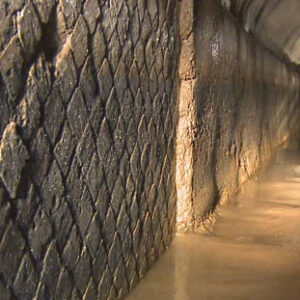
Some discoveries are valuable for what they’re made of. This one is haunting for what it seems to mean. Deep beneath the Yucatán, divers found a single wooden canoe resting at the bottom of a flooded cave near Chichén Itzá — and the more researchers studied it, the more it looked like a boat that was never meant to float.

A First of Its Kind
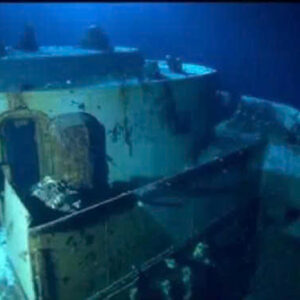
In 2021, divers exploring a water-filled cave near the great Maya city of Chichén Itzá came upon something no one had seen before: an intact Maya canoe — the first ever found in the Maya region. Most ancient wood rots away in tropical climates within years. This one had survived, preserved in the still, mineral-rich water of a cenote.
For the Maya, a cenote was not just a water source. These deep natural sinkholes were sacred — believed to be openings into Xibalba, the underworld, the realm of the dead and the gods who ruled it. To lower something into a cenote was to send it across a threshold.
A Ring of Offerings
When researchers examined the area around the canoe, the picture deepened. Scattered nearby were the bones of animals — a dog, an eagle, a turkey, and an armadillo — 38 skeletal remains in all, alongside a single human bone: a woman’s foot. There was a ceremonial knife, traces of mural painting, and the fragments of around 40 pottery vessels.

Crucially, many of those vessels appear to have been broken on purpose. Deliberately “killing” objects — smashing them so their essence could pass to the other side — is a known feature of ritual offerings in many ancient cultures. This was not debris. It was a carefully assembled act.
The Armadillo’s Strange Importance
Of all the bones, the armadillo carried the most weight — symbolically. The Maya associated the armadillo with the underworld, even linking it to God L, one of their principal deities of the realm below. Part of the logic is beautifully literal: an armadillo can hold its breath and cross bodies of water, “descending” and emerging again. An animal that could pass through water and survive was a natural emblem for the journey into the land of the dead.
Placed beside a canoe, in a doorway to the underworld, the armadillo reads less like a meal and more like a message.

A Boat Not Meant for Water
Then there is the canoe itself. According to researchers, it may have been built more heavily than a vessel intended for everyday travel would need to be — a detail that, if it holds up, points away from practical use and toward ritual. (It’s worth saying plainly: this interpretation is still being studied, and some conclusions remain tentative.)
But the idea is striking. If the canoe was never really meant to cross a lake or river, then what was it for? The most evocative answer offered is also the simplest: it was built to cross worlds — a vessel for a symbolic voyage from the realm of the living into the realm below.
Why It Stays With Us
We can measure the wood and count the bones, but we can’t hear the words that were spoken as these things were lowered into the dark water. Someone chose each object. Someone broke the pots. Someone decided a foot, an armadillo, a knife, and a boat belonged together at the edge of the underworld.
That’s the quiet power of a site like this. It isn’t just an artifact — it’s an unfinished sentence, a message addressed to gods we can no longer ask. The canoe waits at the bottom of its sacred pool, pointed, perhaps, toward a destination we can only guess at.
So here is the question worth carrying back up into the light: when they lowered a boat into a doorway to the dead, what do you think they were trying to say to the gods below?