For more than a thousand years, a city stood in total silence beneath the trees of southern Mexico. No roads led to it. No looters had reached it. The forest had simply closed over it and kept it.
Then a beam of light from above found what generations on the ground never could.
## What we were told
The great Maya cities, we often assume, have mostly been found — mapped, excavated, fenced off, ticketed. The age of discovering whole lost cities feels like it belongs to the past.
That assumption keeps being proven wrong. And the jungle keeps proving it.
## What was found
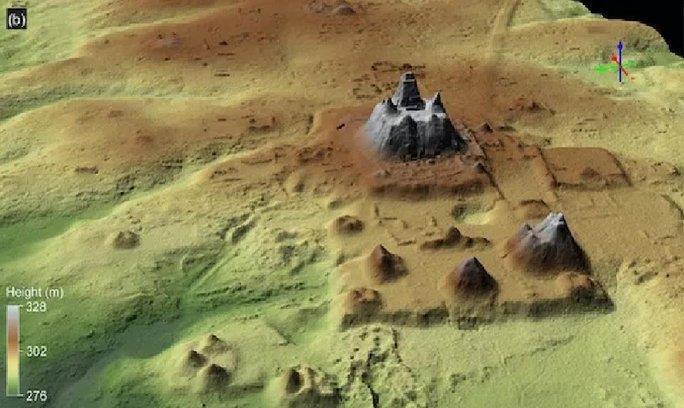
In the **Calakmul Biosphere Reserve** in **Campeche, Mexico**, archaeologists identified a lost Maya city named **Minanbé** — not by hacking blindly through the forest, but by scanning it from the air with **LiDAR**.
Even then, reaching it was brutal: a **5-kilometer path** had to be cut through dense jungle, and the rest covered on foot.
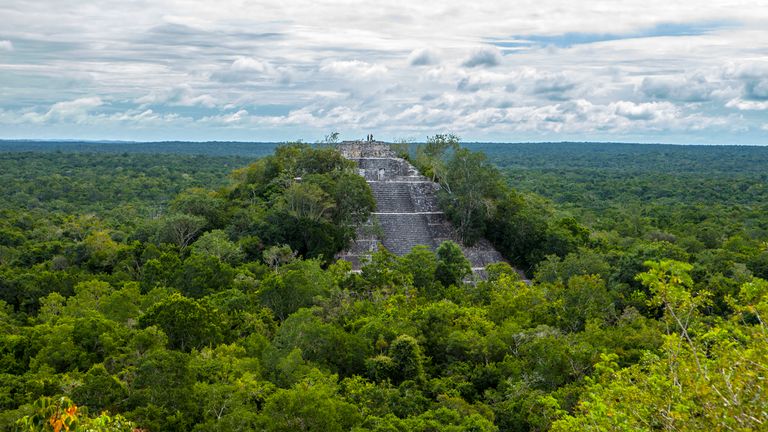
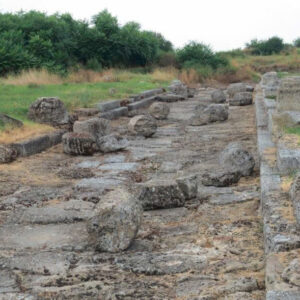
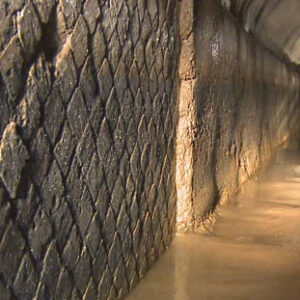
What waited there was a full city: **plazas, palaces, a 13-meter (43-foot) pyramid, carved stelae, altars,** and an **advanced water-management system**. Inscriptions date to **AD 849**, with another monument possibly reaching back to the **late seventh century**.
**And there were no signs of looting — making Minanbé one of the best-preserved Maya cities found in decades.**
## The detail that changes everything
LiDAR — Light Detection and Ranging — is the quiet revolution behind discoveries like this. An aircraft fires millions of laser pulses at the ground; a few slip between the leaves, bounce off the surface, and return. Strip away the vegetation digitally, and the bare earth appears — including the unmistakable straight lines and mounds of human architecture.
A forest that hid a city for a millennium becomes transparent. Structures invisible from ten feet away leap out from above. It’s less like searching and more like the jungle suddenly turning to glass.
## The mystery of an untouched city
The word that makes archaeologists hold their breath is **untouched**. Most major sites were looted long ago — tombs emptied, stelae sawn off, context destroyed in the hunt for sellable treasure. What survives is often a robbed shell.
Minanbé, by contrast, appears to have been left alone. That means its monuments, its inscriptions, its layout, even what lies inside, may still sit roughly as the Maya left them. An unlooted city is not just a prettier ruin — it’s a far richer source of knowledge, because nothing has been ripped from its place.
What it might still hold — sealed chambers, unread inscriptions, undisturbed offerings — is exactly the kind of question that keeps the discovery thrilling.

## So what could it really tell us?
For one, the inscriptions give it a voice. Dates like AD 849 anchor Minanbé in the timeline of the Maya world, and unlooted monuments may carry names, events, and relationships we couldn’t recover from plundered sites.
For another, the water-management system speaks to sophistication — the Maya engineered their cities to survive in a demanding tropical environment, storing and controlling water with real ingenuity.
And it underlines a bigger truth: the map of the ancient Maya is still being drawn. LiDAR keeps revealing that the lowlands were far more densely settled than we believed — a landscape of interconnected cities, many still hidden.
## Why it stays with us
There’s something humbling about a city that survived precisely because no one found it. Its protection was its obscurity; the jungle that swallowed it also saved it. While the famous sites were emptied, Minanbé waited in the dark, intact, patient.
It’s a reminder that “we’ve found everything” is almost never true — that the greatest chapters of a civilization can still be lying a few kilometers off the nearest path, under a canopy of leaves, waiting for the right beam of light.
So here’s the thought to carry into the green: if an entire untouched city could hide for a thousand years just out of sight, how much of human history is still down there, kept by the forest? 🏛️ Tag someone who’d cut that 5-kilometer path with you.