Total darkness. Crushing pressure. Cold salt water pressing down at seven hundred atmospheres. On the absolute floor of the Indian Ocean, light died millions of years ago. Yet, robotic submersibles sweeping through the abyssal gloom just illuminated a scene straight out of a gothic nightmare. White bone. Rows of ancient teeth. Hundreds of leviathans lying in the silt, frozen in time.
Image caption: A high-resolution sonar bathymetry map depicting the abyssal plain of the Indian Ocean where the deep-sea fossil concentration was located.

Quick Facts
| Field | Details |
| Legend / Subject | Abyssal Whale Fall & Deep-Sea Fossil Graveyard |
| Earliest source | CSIRO Marine National Facility Expedition (RV Investigator, 2022) |
| Key artifact | 5.3-million-year-old fossilized tooth of a extinct predatory tooth-whale |
| Location | Cocos (Keeling) Islands Marine Park, Eastern Indian Ocean |
| Mechanism / Claim | Continuous ocean-floor biological succession creating a multi-million-year fossil vault |
| Scientific consensus | Natural accumulation of whale falls over epochs preserved by low oxygen and high sediment deposition |
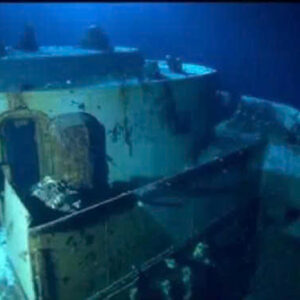
Image caption: Remotely Operated Vehicle (ROV) footage revealing ancient fossilized cetacean bones embedded in deep-ocean sediment.
What We Were Told
For centuries, mariners believed the deep ocean floor was a barren, lifeless wasteland. Early oceanographers theorized that once a creature died in the open sea, its remains disintegrated into microscopic dust long before reaching the bottom. The abyss was thought to be an eternal void—empty, silent, and devoid of history.

What Was Found
In the remote marine parks near the Cocos Islands, research vessels deployed deep-sea sonar and heavy dredging gear into trenches over four miles deep. What emerged was not barren sand, but an extraordinary treasure trove of ancient life. Scientists identified at least 485 distinct fossilized bone and tooth sites buried in the abyssal mud.
Beneath four miles of black ocean water lay an unbroken burial ground spanning millions of years of oceanic evolution.
Image caption: Close-up view of a 5.3-million-year-old fossilized tooth recovered from the Cocos Islands deep-sea site.
The Detail That Changes Everything
Among the hundreds of recovered remains, paleontologists uncovered a single mineralized tooth that defied immediate classification. Laboratory analysis revealed it belonged to a 5.3-million-year-old direct ancestor of the modern sperm whale—a massive, predatory monster equipped with dagger-like teeth on both its upper and lower jaws. More shocking still, buried alongside it were the remains of an entirely new, previously unknown species of extinct whale that science had never cataloged.
Image caption: A scientific illustration comparing the massive jaw structure of prehistoric predatory whales with modern deep-diving species.
The Central Mystery
How did hundreds of massive ocean giants from completely different geological epochs end up concentrated in one specific, pitch-black zone of the sea floor? A single whale fall creates a localized ecosystem that lasts for decades—nourishing sleeper sharks, bone-eating worms, and blind crustaceans. But the staggering sheer density of fossils at this exact location suggests something far stranger: was this abyssal plain an ancient ocean bottleneck, a prehistoric die-off zone, or a oceanic graveyard where sea monsters traveled to die across five million years?

Competing Theories
The Ancient Marine Migration Bottleneck: Marine biologists suggest that ancient ocean currents funnelled migratory whale pods through this exact corridor for millions of years. Sick or aging leviathans naturally succumbed to time here, sinking to create a continuous layer of whale falls across millennia.
Geological Tectonic Trap: Geologists argue that localized underwater topography and sudden sea-floor shifts acted as a massive sediment collector, trapping falling carcasses in an oxygen-depleted basin that perfectly preserved bone tissue from decay.
Scientific Consensus: Paleontologists and marine geologists agree that the site represents a long-term accumulation zone. The extreme depth, low temperatures, and specialized mineralization processes allowed fossilization to occur over 5.3 million years, preserving both known apex predators and extinct evolutionary lineages in a rare natural vault.
Image caption: Diagram illustrating the biological stages of a whale fall ecosystem, from flesh consumption to final bone fossilization.

Why It Still Haunts Us
As remote submersibles push deeper into the unexplored abyssal plains of our planet, each dive reveals that the darkest corners of Earth hold secrets older than humanity itself. If a 5.3-million-year-old graveyard lay hidden four miles beneath the waves for millennia, what other forgotten leviathans are still waiting in the dark?