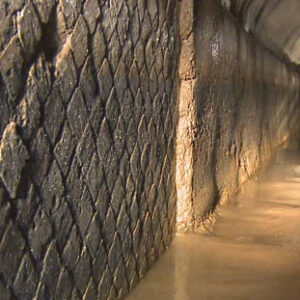
The seabed off Sicily held a secret for more than two millennia.
Dark water. Ancient pottery. Then metal.
Dozens of heavy ingots lay near the remains of a shipwreck off Gela. They were not gold. They were something stranger.
A metal with a name that had already entered legend.

Quick Facts
| Legend / Subject | Orichalcum, a valuable metal described by Plato |
| Earliest source | Plato’s Critias, written in the 4th century BC |
| Key artifact | Copper-zinc alloy ingots |
| Location | Underwater site near Gela, Sicily |
| Mechanism / Claim | The ingots are chemically compatible with ancient orichalcum |
| Scientific consensus | The alloy is real; the discovery does not establish the historical existence of Atlantis |
What We Were Told
Long before modern archaeologists found the metal, Plato wrote about orichalcum in his account of Atlantis.
In Critias, Plato described it as one of the most precious metals known to the Atlanteans, ranking it below gold.
For centuries, the name remained difficult to connect to a specific archaeological material.
Then came Gela.
Image caption: The Mediterranean coastline near ancient Gela, Sicily, where the underwater finds were recovered.
What Was Found
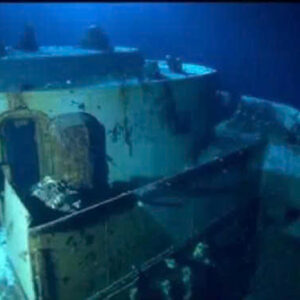
Underwater archaeologists recovered metal ingots near the remains of an ancient shipwreck off Gela.
The associated pottery and shipwreck remains date to around the end of the 6th century BC. Researchers have suggested that the cargo may have originated in the eastern Mediterranean or Aegean.
Chemical analysis revealed that the mysterious ingots were primarily copper and zinc.
That composition is consistent with an ancient brass-like alloy identified by researchers as orichalcum.
Image caption: Representative Gela ingots documented during scientific analysis.

The Detail That Changes Everything
The most striking detail is not the connection to Atlantis.
It is the quantity.
The first recovery produced around 40 ingots, while a second discovery in 2016 recovered another 47 nearby. Chemical analysis found the two groups sufficiently similar that researchers concluded they could belong to the same naval cargo.
More than 22 kilograms of the alloy were reported from the initial discovery.
This was not simply a mysterious piece of metal.
It was cargo.
Image caption: Copper-zinc ingots recovered from the Gela underwater archaeological site.

The Central Mystery
Why was so much of this particular alloy being transported across the Mediterranean?
The ancient metal was valuable. Its copper-zinc composition gave it a distinctive appearance and useful physical properties, and researchers describe the discovery as evidence of a sophisticated network involving production, trade, and end users.
But one question remains much harder.
Was this really the orichalcum Plato had in mind?
Image caption: A reconstruction-style view of an ancient Mediterranean trading vessel carrying metal cargo.
Competing Theories
Theory 1 — The Gela alloy was ancient orichalcum.
The copper-zinc composition is compatible with the material identified in the archaeological literature as orichalcum.
Theory 2 — “Orichalcum” was a broader ancient term.
The word may not have referred to one chemically fixed material throughout antiquity. Its precise meaning and composition remain difficult to establish from literary evidence alone.
Theory 3 — The Atlantis connection is literary, not archaeological.
Plato explicitly places orichalcum within his account of Atlantis, but finding a real copper-zinc alloy does not demonstrate that the island described by Plato existed as a historical civilization.
Scientific position: Researchers can establish that the Gela ingots are a real ancient copper-zinc alloy and that they are compatible with what archaeological studies call orichalcum. They cannot establish from these finds that Atlantis was a real place.
Image caption: Laboratory analysis of ancient alloy can reveal chemistry, but not prove a legendary civilization.

Why It Still Haunts Us
The strangest part of the story is that the metal is real.
The shipwreck is real. The ingots are real. Their copper and zinc composition is measurable.
And the word orichalcum really does appear in Plato’s account of Atlantis.
But whether the metal beneath Sicily has anything to do with Plato’s legendary island remains another question entirely.
How did a real ancient metal become part of one of history’s most enduring legends?
Sources & further reading: Plato, Critias; Caponetti et al., Microchemical Journal; University of Camerino; University of Palermo research records.