More than 6,000 metres above the sea, where the air is too thin to breathe easily and the cold can stop a heart, the Inca did something almost impossible to imagine. They climbed to the summits of volcanoes — and there, on the roof of the world, they left children.
Five hundred years later, archaeologists found them still frozen, still dressed, almost perfectly preserved. And on at least one of those small bodies they found something that has haunted researchers ever since: the unmistakable mark of a lightning strike. Now some scholars are asking a chilling question — what if the lightning wasn’t an accident at all, but the entire point?

The frozen children of the Andes
To understand the question, you have to understand the ritual behind it. The Inca practised something known as capacocha (or qhapaq hucha) — a solemn, state-level rite in which carefully chosen children were taken to sacred high places and offered to the gods, often to mark a moment of great importance: a coronation, a death, a disaster, a plea for the empire’s protection.
In 1999, on the summit of the volcano Llullaillaco on the border of modern Argentina and Chile, the archaeologist Johan Reinhard and his team uncovered what are widely described as some of the best-preserved mummies ever found. There were three: a girl of around thirteen now known as the Llullaillaco Maiden, a young boy, and a little girl roughly six years old.
That youngest child is no longer known by her name. Researchers call her La Niña del Rayo — the Lightning Girl. Because at some point after her death, on that lonely summit, she was struck.

A god who answered in thunder
To us, a lightning strike on a mountaintop is simple physics. To the Inca, it may have been something else entirely: a god reaching down to touch the earth.
The Inca revered a powerful weather deity named Illapa — lord of thunder, lightning and rain, ranked among the most important gods after the sun and the moon. According to researchers, the Inca believed that a person struck by lightning had been singled out for a kind of dark honour. The strike marked them. It meant a god had taken an interest.
People who survived a lightning strike, it’s said, could even be chosen to serve as priests of Illapa. So imagine how that belief might twist around a sacrifice already laid on a summit. If lightning then found the body, was that a tragedy — or a sign that the offering had been accepted?
The bodies that lightning found
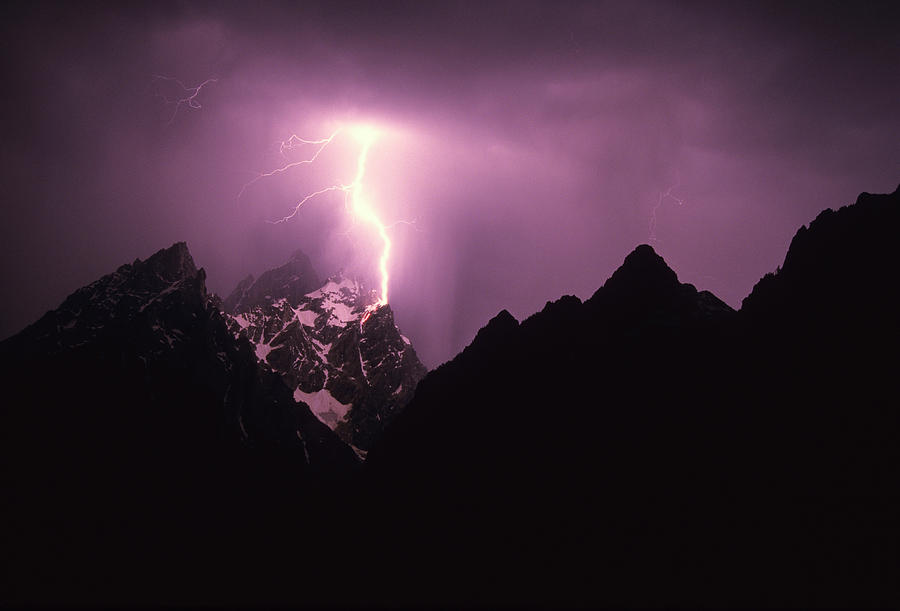
The Lightning Girl is not the only clue. Researchers studying capacocha remains from other high Andean peaks — including the volcanoes Ampato and Pichu Pichu in Peru — have reported that several of the sacrificed individuals appear to have been struck by lightning after death.
But here the real science is more subtle, and more interesting, than the rumours suggest. In at least one analysis, the discoloration of the bones reportedly showed that lightning had not always hit the bodies directly. Sometimes it had struck close — near enough to heat the surrounding soil dramatically, scorching everything around the burial without a direct hit. Researchers have also suggested the strikes may have been encouraged not only by the sheer altitude of the sites, but by the metal objects — small figurines and ornaments — placed alongside the dead.
In other words: put a body, wrapped in fine textiles and adorned with metal, on the highest, most exposed point for miles around, and you have built something a storm can find.
To be struck by lightning, the Inca may have believed, was not death by accident — it was a god reaching down to say: this one is mine.

The mystery: did they choose the peaks on purpose?
This is where wonder shades into something colder. Some scholars have proposed that the burial sites were chosen deliberately — that the Inca selected summits precisely because they were likely to draw lightning, because a strike was desired.
It’s a striking idea, and the circumstantial evidence is real: the locations are extraordinarily high, several sit atop volcanoes that themselves rumble and smoke, and the link to Illapa runs through the heart of Inca religion. If you wanted to offer a child to the god of lightning, where better than the one place on earth most likely to feel his touch?
And yet — and this matters — no one can say for sure. Reading deliberate intent into a choice made five centuries ago, by people who left no written records, is one of the hardest things in archaeology. The peaks may have been chosen for many reasons at once: their height, their visibility, their nearness to the heavens, their volcanic power. The lightning may have been a hoped-for blessing, a known risk, or simply a meaning the Inca read into the world after the fact. The honest answer is that the strategy, if it was one, is still being debated.
So what could it really be?
A few possibilities hang in the thin mountain air, none of them proven.
Perhaps it was exactly as the boldest reading suggests: a calculated act, the summit chosen as a lightning rod for the divine, the strike sought as the ultimate seal of acceptance.
Or perhaps the truth is quieter. The Inca placed their most sacred offerings as close to the gods as the land allowed — and high places attract lightning whether you want them to or not. The strikes came; and a culture that already saw lightning as the voice of Illapa simply understood them as confirmation.
Or perhaps it was both, tangled together in a way our modern categories can’t quite separate — intention and coincidence and faith, fused on a frozen summit.
Why it still haunts us
Whatever the answer, the human detail is the part that stays with you. Hair analysis has reportedly shown that the children were given increasing amounts of coca leaf and maize beer in the weeks and months before the end — calmed, perhaps, or sedated, as they were led upward in long processions to places almost no one ever went.
They were dressed with care. They were surrounded with offerings. They were arranged as though sleeping. Everything about the rite suggests these children were not seen as victims to be discarded but as messengers — sent, in the Inca worldview, to live among the gods.
That is what makes capacocha so difficult to look away from. It is tender and terrible at once. It asks us to hold two truths in the same hand: profound belief, and the unbearable cost of it.
So here is the question worth sitting with. When lightning found those small, frozen bodies on the highest peaks of the Andes, was it the cruel chance of physics — or were the Inca, in their own dark and reverent logic, expecting it all along?