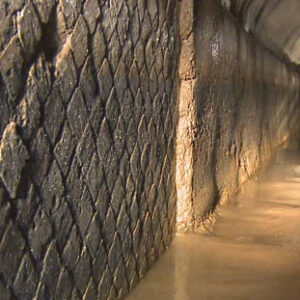
Cool, damp air inside the gallery. Glass glints under targeted spotlights. Inside the case sits a vessel molded centuries before the Wright brothers took flight. Smooth lines. A streamlined body. A solitary human figure mounted on top, bracing against an invisible wind.

Quick Facts
| Category | Details |
| Legend / Subject | The Aerodynamic Vessel of Lambayeque |
| Earliest Source | Mochica / Chimu cultural record (c. 700–1300 AD) |
| Key Artifact | Streamlined ceramic effigy vessel |
| Location | Brüning National Archaeological Museum, Lambayeque, Peru |
| Mechanism / Claim | Aerodynamic body design mimicking flight or hydrodynamics |
| Scientific Consensus | Ceremonial water/spirit vessel with symbolic zoomorphic motifs |
What We Were Told
For generations, history books painted pre-Columbian South America as a world rooted strictly in agrarian ritual and earthbound engineering. Artifacts were cataloged neatly as utilitarian pots, burial gifts, or standard religious iconography.
What Was Found

When researchers examined the ceramic collection at Peru’s Brüning National Archaeological Museum, one specific piece broke the visual mold. Its fluid, swept-back lines and tapering fuselage mirrored modern aerodynamic principles with unsettling precision.
An ancient potter shaped clay into a form that modern wind tunnels would recognize in an instant.
Image caption: Close-up of the streamlined pre-Columbian ceramic vessel displayed under warm gallery lights at the Brüning Museum in Lambayeque, Peru.
The Detail That Changes Everything
The most compelling element is not merely the vessel’s curved body, but its human operator. Mounted atop the craft sits a figure holding a position remarkably similar to a pilot steering a craft, crafted centuries before European contact brought wheeled transport—let alone air travel—to the Andes.
Image caption: Archival photograph showing the human figure mounted on the apex of the ceramic artifact, highlighting its distinct posture.

The Central Mystery
Why would an ancient artisan, working with hand-thrown clay and wood-fired kilns, construct a vessel whose exterior contours reduce fluid drag? Was this an accidental convergence of form and function, or did pre-Inca engineers possess an intuitive understanding of physics that mainstream archaeology has yet to decode?
Image caption: Side profile analysis comparing the vessel’s swept contours to natural marine and avian forms.
Competing Theories
Alternative researchers contend that the object’s specific proportions go far beyond basic aesthetics, claiming it represents a conceptual model of flight or rapid aquatic transit passed down through lost technical traditions.
Mainstream archaeologists and anthropologists offer a different explanation. They point out that coastal Peruvian cultures, such as the Moche and Chimú, were master mariners and observers of nature. Mainstream consensus maintains that the vessel is a ceremonial stirrup-spout or liquid container representing stylized sea birds, marine mammals, or mythological sky deities, where the streamlined shape served traditional ritual mechanics rather than pre-modern aerodynamics.
Image caption: Exhibition hall at the Brüning National Archaeological Museum housing pre-Columbian artifacts from northern Peru.

Why It Still Haunts Us
As the vessel sits silently behind glass in Lambayeque, it forces us to reconsider the boundaries of ancient imagination. Did its creator simply carve a sacred ocean bird, or were they capturing something they witnessed in the skies above ancient Peru?
Sources & further reading: Brüning National Archaeological Museum Archives; Ministry of Culture of Peru (Ministerio de Cultura del Perú); Journal of Anthropological Archaeology.