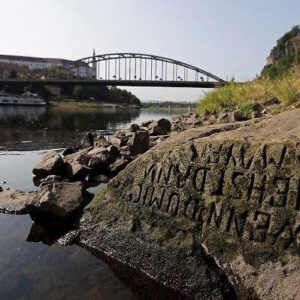
A mile-long bridge built under Emperor Constantine spent centuries hidden beneath the Danube — until a record-breaking heat wave finally let archaeologists see it whole.
Quick Facts
| Detail | Verified Information |
|---|---|
| Structure | Constantine’s Bridge, a Roman-era bridge across the Danube River |
| Built | A.D. 328, under Emperor Constantine I |
| Connected | Ulpia Oescus (modern Bulgaria) and Sucidava (modern Romania) |
| Length | More than a mile — among the longest bridges of the ancient world |
| Trigger for rediscovery | Record-low Danube water levels during a 2026 European heat wave |
| Significance | Rare opportunity to map the bridge’s submerged foundations directly |
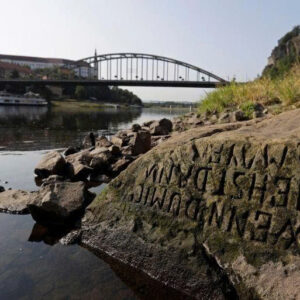
Image caption: The exposed foundations of Constantine’s Bridge, visible for the first time in years as Danube water levels dropped in 2026.

What We Were Told
Rivers keep their own kind of archive. Most years, the Danube gives nothing up — its bed stays hidden under enough water that anything built along it centuries ago simply disappears from view, known only through old texts and the occasional low-water sighting.
Constantine’s Bridge had always belonged to that second category: documented, discussed, but rarely actually seen.
What Was Found
In 2026, a heat wave swept across Europe severe enough to drop the Danube’s water level dramatically — the same event that resurfaced centuries-old “hunger stones” further upstream on the Elbe. Along the stretch of river separating modern Bulgaria and Romania, the drought exposed something far larger: the foundations of a Roman bridge built sixteen centuries earlier.
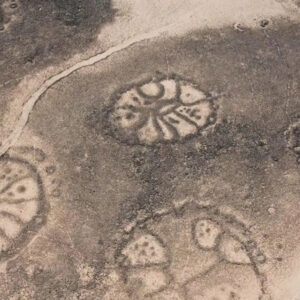
Image caption: The Danube River at record-low water levels during the 2026 European heat wave.
Constantine’s Bridge was completed in A.D. 328, commissioned under Emperor Constantine I to link Ulpia Oescus on the river’s southern bank with Sucidava on the northern side. At more than a mile long, it ranked among the longest bridges anywhere in the ancient world — a piece of infrastructure built not just to cross a river, but to project the reach of an empire.

The Detail That Changes Everything
For archaeologists, the significance wasn’t simply that the bridge existed — that much was already known. It was that the drought allowed them to finally map its foundations directly, rather than relying on historical accounts or brief, partial glimpses during previous low-water years.
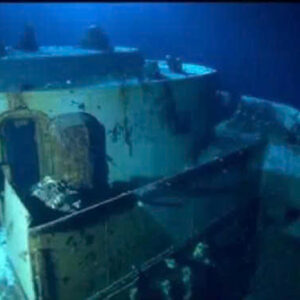
Image caption: Archaeologists documenting the bridge’s foundations, exposed directly on the riverbed for detailed mapping.
A structure built to outlast a river crossing ended up outlasting the empire that built it — and needed a modern climate extreme to be properly seen again.
The Central Mystery

The bridge’s basic history isn’t in dispute. What remains open is a narrower, more physical question: how much of the original structure survives intact beneath the riverbed, and how completely the exposed sections reflect the bridge’s original engineering versus sixteen centuries of erosion, ice, and shifting sediment.
Every drought severe enough to expose it gives researchers another partial answer — and every time the water rises again, that window closes.
Competing Theories
There’s little genuine dispute over who built the bridge or when. The more open discussion among researchers centers on its exact original construction details — the specific engineering methods used to anchor pilings in a riverbed as wide and powerful as the Danube’s, and how those methods compare to other major Roman river crossings of the same period. Answering that fully depends on how much of the substructure future low-water events continue to reveal.
Why It Still Haunts Us
Constantine’s Bridge was never meant to be a mystery. It was meant to be permanent — visible, functional, a fixed point connecting two banks of an empire’s frontier. Its disappearance beneath the Danube wasn’t collapse so much as burial, one river cycle at a time, until only extreme drought could undo it.
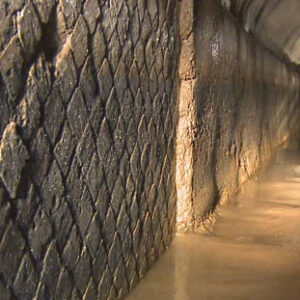
Image caption: What a modern climate extreme revealed — a bridge built to last an empire, resurfacing sixteen centuries later.

In 2026, the same conditions that pulled centuries-old warning stones out of the Elbe did something similar further south: handed researchers a direct look at a structure most of them had only ever read about.
Sources & further reading: Reuters; Archaeological reports on Roman Danube infrastructure; Regional heritage authorities in Bulgaria and Romania.