A fossilized jawbone discovered in Morocco, dated to approximately 773,000 years ago, is contributing to ongoing discussions about the deep origins of modern humans and Neanderthals. The specimen is drawing scientific interest because it displays a mixture of anatomical traits that appear both primitive and more derived compared to later Homo species.
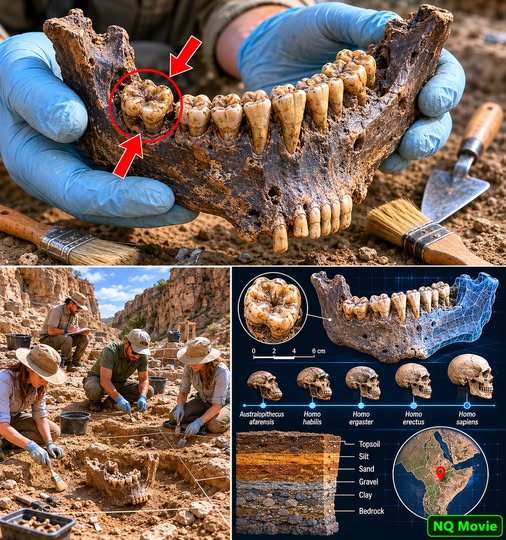
Researchers studying early hominin evolution interpret such mosaic features as evidence that human populations during the Middle Pleistocene were highly diverse. Rather than evolving in a straightforward linear sequence, different groups may have developed varying anatomical characteristics at different times and in different regions.
The Moroccan jaw adds to a growing body of evidence suggesting that the evolutionary split between Homo sapiens and Neanderthals likely involved a complex and prolonged process. Many scientists now propose that the common ancestral populations were spread across Africa and possibly parts of Eurasia, with gene flow and population interactions continuing over hundreds of thousands of years.
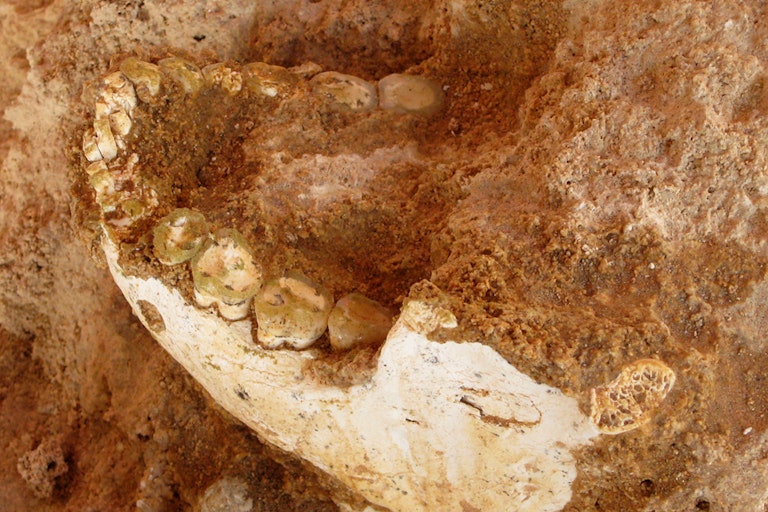
This view contrasts with earlier simplified models of human evolution, which often depicted a direct progression from one species to another. Instead, current research increasingly supports a branching pattern, where multiple hominin groups coexisted, diverged, and occasionally interbred.
The fossil evidence from North Africa is particularly important because it expands the geographical range of early human evolution beyond the traditionally emphasized East African sites. It suggests that human ancestors were already widely dispersed across the continent much earlier than previously ᴀssumed.
However, scientists caution that ᴀssigning precise evolutionary relationships to fragmentary fossils remains challenging. Jaw morphology alone cannot fully resolve phylogenetic placement without additional skeletal evidence and, ideally, genetic data, which is rarely preserved in such ancient remains.
Despite these limitations, the Moroccan jaw contributes to a broader shift in paleoanthropology toward viewing human evolution as a dynamic, branching process shaped by migration, isolation, and interaction among multiple populations.

As further fossils are discovered and analytical techniques improve, researchers expect the picture of early human origins to become even more detailed—and more complex than previously imagined.